Category: Show Notes

  • Chainsaws, Firebreaks, and Finding Direction with Aaron Williams

    Chainsaws, Firebreaks, and Finding Direction with Aaron Williams

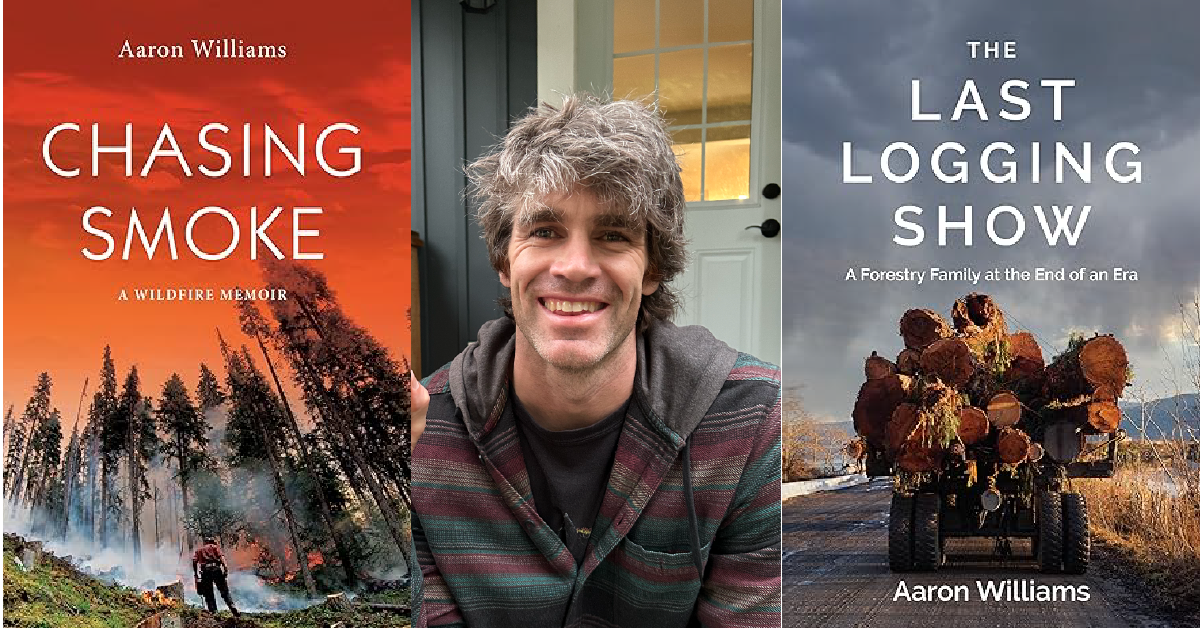
    In this episode of Definitely Not Famous, host Rebecca Hogue speaks with Aaron Williams about his memoirs Chasing Smoke, which recounts his work as a wildland firefighter, and The Last Logging Show, which follows his family’s history in the old-growth logging industry in northern British Columbia. Aaron discusses his upbringing in Terrace and Haida Gwaii, how logging camps shaped his understanding of the bush, and how his logging background helped him move into firefighting after the Queen of the North sank and altered his plans.

    He explains the practical side of wildland firefighting, including building firebreaks, cutting hose trails, and clearing land to mineral soil, and says the work pushed him toward greater discipline and teamwork. Aaron also reflects on writing *The Last Logging Show* while his first book was being published, his goal of documenting a disappearing way of life, and his choice to include environmental and Indigenous perspectives after feedback from early readers.

    The episode closes with Aaron discussing his current manuscript about the Martin Mars water bomber and the lessons he has learned from publishing, including the value of reading widely, working well with publishers, and being easy to work with.

    Support the podcast by purchasing The Last Logging Show using one of the affiliate links below.

    Support the podcast by purchasing Chasing Smoke using one of the affiliate links below.

    A rounded‑corner button with a beige background. On the left, a pink and yellow quill is dipped into a dark blue ink jar. A detailed dark blue and medium‑blue desk microphone sits beside it. A small pink heart appears above the quill. To the right, hand‑drawn dark blue text reads “Be a Patron of My Art.” The illustration has a soft, handcrafted indie style.

    Support my Podcasts using Patreon. Your $3 per month helps the podcast stay live, supports me as an Artist, and helps me access other funding.

    Transcript

    He grew up spending time in the logging camps in Haida Gwaii, at the time known as Queen Charlotte Islands. Through a series of unexpected shifts, he started fighting wildfires. How could logging possibly prepare Aaron for fighting fires?

    My guest today is Aaron Williams, the more extra than ordinary author of two memoirs, Chasing Smoke, about his time as a wildland firefighter, and The Last Logging Show, about his family’s experience as one of the last old-growth loggers. He grew up in a small town in northern British Columbia, Terrace, only 60 kilometers from where I grew up.

    After the Queen of the North ferry sinks, an unexpected, to say the least, event that had far-reaching effects in northern BC, Aaron had to make a pivot and signed up to be a wildland firefighter.

    Coming from a family where my my dad was a logger when I was a kid, then he was, running a concrete business for a while through my, younger years into my teens. Then he went back to logging when I was a teenager, at the very impressionable age of as far as working goes, at like around age 16, when you’re thinking like, “Eventually I’ll have to work,” and that’s what Dad did for most of his life.

    But as far as how that led to firefighting, … It was, a connection that we had in the interior of BC in Smithers that their son had gone into forest firefighting and, it was like well-paid, better paid than the kinda jobs that were around on the coast at the time.

    the economy like in Prince Rupert was pretty bad around 2000, 2005, 2006. So it was like, this is, yeah, it’s this is like well-paid work that you don’t need like a ton of education to do. It’s in the bush. You’re familiar with that because I’d been working with my dad logging in, later in high school in the summers and then after high school for a bit.

    So that’s the list of ingredients or the way that it led to… But that’s how I got to firefighting, And then I also should add that I was working on BC Ferries in the summer of 2005, cleaning the boat when it came into Prince Rupert. This was the ferry that ran from Port Hardy on Vancouver Island up to Prince Rupert on the north coast.

    And I would clean that boat every second night when it came in to Prince Rupert, vacuuming and, wiping tables and listening to my Discman overnight. And, the plan was to become a deckhand on the boat the next summer. So during that winter, I took my courses. It was like a month’s worth of courses to become a deckhand.

    Basically a week or two after I took those courses, the Queen of the North sank, and they were down a ferry. They weren’t hiring any deckhands because even though they were stretched to the max with the ferry they did still have, they didn’t need a bunch of extra new employees. So between that the ferry sinking, and my mom’s connection to our friend in the interior, whose son was firefighting, it was those things came together and it was like, this is the next logical step.

    Nothing seemed like it was logical at the time.

    Being a wildland firefighter changed Aaron’s life trajectory, helping him get out of a listless teenager funk. Peer pressure helped him learn to take his job more seriously.

    The change kinda came slowly. I feel like I’m really slow to adapt to anything. And, so the first couple years of firefighting, I was resistant to this kind of like fall in line, put the team before yourself kind of mentality.

    And then f- for whatever reason, I just kinda came around to it. I guess it was just like basic peer pressure. It was like I had friends on the crew who, were maybe a little bit more willing to fall in line, some of them, and and be, just be a little bit more, tuck in your shirt, tie up your shoes, we need to be presentable to the public, that kind of stuff.

    at first I was hesitant to like, to take on all of those seemingly like stuff that I always looked down on, who cares what you look like, it’s what matters inside kind of thing. And then making those changes of no, it does matter like how you’re perceived by the public if you’re in this sort of public-facing position and stuff like that.

    So I guess it, overall, the change was one from like less discipline. I almost feel like if I connected it back to high school, my high school was quite regimented ’cause it was like I was in band, I was in sports, I was like really busy all the time, and never really felt like I had enough freedom, in quotes, to do what I wanted.

    I often found myself like wanting to be able to ride my bike more or go skiing more, but it was always, there was always basketball or band got in the way of that. So then I finished high school, and I suddenly I had a, I felt like I had all this freedom, and I was really enjoying that, and then I get into firefighting and enjoying that, but also there was this listlessness to it as well that s- that sort of started to take hold into my early 20s.

    And firefighting snapped me out of that, eventually. So definitely my first few seasons on the crew, I wasn’t like, I wasn’t somebody that I think other… Say we came across another fire crew, they wouldn’t have looked at me and been like, “Ooh, that guy’s good. Like we could– I sure wish we had him on our crew.”

    It was like I was not a model worker. But I, tried. Like later on I started trying.

    First logging, then wildland firefighting. There must have been some skills that were transferable. Both loggers and wildland firefighters spend a lot of time living in camps in the middle of nowhere. Aaron developed some skills in his childhood, like using a chainsaw, that helped him on the fire crew. He was comfortable working with loggers and the professional bulldozers and excavators. Knowing the language of logging helped him when he was leading a fire crew.

    I think it was just like an overall comfort of being like out in the bush far from civilization. I definitely was very familiar with power saws, which was like a big help on the fire crew or like a big sort of leg up. I still remember the first time I picked up a chainsaw.

    It was in my, I think my first or second year on the fire crew. I didn’t really know anybody very well and a few logs needed to be cut and I was like, “Oh, I’ll just do it right now.” started the saw, cut ’em, and the, my crew boss at the time was like, “Oh you handle that thing like it’s a dinner fork,” I think he said.

    And I was like, “Oh, thank you. That’s just like like I’ve been doing it since I was 10, so I know how to do this kind of stuff.” and then otherwise, I think the big thing is that the big connection between logging and forest firefighting is on, fire crews you spend a lot of time working around loggers who are digging in fire breaks with their bulldozers and their excavators and stuff.

    And I feel like I really understood those people and that work in a way that quite a few we’d hire some kids out of universities and stuff and bigger centers that didn’t really have any experience working around, this demographic. And for me it was like, “Oh, I like, I know this guy.

    This guy is just like my dad or just like my uncle or just all these guys I’ve, I grew up knowing.” so that was a big help I think, was just being able to like communicate with the sorts of people we’d encounter out on fires.

    In wildland firefighting, it isn’t all about spraying water and attacking the actual fire. Aaron describes how it often also involves creating fire breaks, which require clearing land using techniques and tools that loggers also use.

    A lot of it is like what you’d call indirect attack. It’s let’s set up way away from this big fire.

    I don’t- my favorite part of firefighting is actually when you’re up close to it, and it actually feels like you’re in this, in a actual fight with the fire, where it’s like, “Okay, we can cut this hose trail really close to the fire, lay hose along the fire’s edge, and try to spray it out before it becomes a problem.”

    Pretty often, though, , you’re building fire breaks further away, and what you’re doing is you’re taking out the trees, scraping everything down to what you call mineral soil, so that f- so that, the fire will, in theory, burn up to it and then not be able to burn across it. As you can imagine, if a fire crept up to a highway, it’s not gonna then burn the asphalt and the rocks right across.

    Like it’s hit like a it’s hit a point where it can’t burn any fuel. it doesn’t usually work as well as hoped, I think. But, yeah, that’s a big part of it is like what you’d call indirect attack.

    Aaron began work on his second book while his first book was still being published. He saw the ways the logging industry was changing and wanted to capture that way of life. It was also a great excuse to go visit BC and his family.

    I’d actually started this last logging show before my wildfire book was published. It was a combination of I was writing it, like what I realized looking back was like a furious pace. I was just like, I didn’t really have much else going on in my life, and I was just using up every, like a lot of spare time or whatever just writing.

    And so as soon as I was done that wildfire book, I think I was like, I already had in my head, I was like living in Halifax my partner Sue had a job out here that was the main reason we were living here at the time. I was– I definitely missed BC. It was, I, all my friends were there, a lot of them, and I’m very attached to the place and the work that I had been doing and stuff until recently.

    And I also knew that my dad was nearing the end of his career, even though it turned out he had 10 more years left in him. But he was getting on in years, as were a lot of his coworkers. They were doing this really interesting type of logging on the coast, which you don’t see too much of anymore.

    Like it was old growth logging, so they were using I guess it’s like challenging work and A lot of things are automated now, but a lot of the stuff that they were doing was still like going out, like boots on the hillside kind of thing, like cutting down trees with power saws and dragging out trees with like older equipment and stuff.

    So that really fascinated me was like, “Oh, this is like a way of life that’s disappearing.” And so between the homesickness and the interest in in the work itself and how it was in its sunset years and also just just really being like passionate about writing as much as I could.

    that’s what led me to the logging book was a combination of “Here’s something cool that I think is not gonna be around for much longer, and I miss BC and my family, so it’s a good excuse to go out there and spend time with them.”

    Aaron explains how the type of logging his family did felt like pioneering. They would land at a beach and have to build everything from scratch, not knowing what challenges they would face along the way.

    a lot of guys can remember exactly when they first arrived at a new place because it’s a very pioneering kind of thing. There’s nothing there. Okay, we have to establish a beachhead, It’s like we need a shop to, to be able to fix equipment.

    We need a clearing where we can put the equipment, and then we start building a road, usually up a valley. And from there, like the very first trees that are cut down are basically right where the, right where they first land, and then from there they just work their way back. It’s you could really view that as a sort of really insidious like, destruction of nature.

    it certainly is that, especially the way they used to do it. But from a h- from a sort of like a human industrious standpoint, it’s, it would be very exciting because, much the same as like how maybe a fisherman feels once, when they put out their nets or put out their traps, and it’s “What’s gonna happen?

    are we gonna make this work? Is it gonna all, will the, are there fish here? Are there crab here or whatever?” It’s like with the logging, it’s “Here we are at this new place. Can we make this work? What kind of problems are we gonna run into?” it’s a pioneering kind of a endeavor that, that is like extremely rare these days, especially in the, in, in like more developed countries where we have lots of machinery, and we’ve been doing it for a while.

    Aaron wrote his first book as part of an MFA program. It was based upon ex- the experiences he had in the past when he didn’t know that he was gonna be writing a book about it. That meant that he didn’t do the specific research and take detailed notes to help him in the writing process.

    For his second book, he had more opportunity to do research. He worked more on writing craft.

    I felt like with my firefighting book, I missed an opportunity to do a lot of research and incorporate that into the book. I felt like I had this great sort of, foundation or skeleton framework for a book with my firefighting book, which was that like I’m just following a fire crew through a season.

    But I did basically no research, and that in hindsight, I was “Oh, missed an opportunity there.” that book could have felt a lot more well-rounded. It would have been more informative to people who know nothing about wildfire and stuff like that. So that was one thing that spurred me on with the second book was like, “Okay, do more research.”

    And even then I did significantly more research. It still felt a little thin at times. And second book compared to first book this story was less about me, which I felt relieving. you saw like a lot of me in the first one and less of me in the second one, and the second one felt like a nicer balance.

    I don’t think I’m as much of a straight, memoirist, here’s my story, as some other writers are, who I enjoy. So yeah, more research in the second book and just more care, overall. Writing my first book was like if you ran like a running race and you felt really good, like you’re like, “Yes, I’m running.

    This is good. I’m working hard,” and you get to the end, and you realize you got last place. You’re “Oh, I felt like I worked hard, but there’s obviously a lot of people out there who have worked way harder, and if I wanna be good at this, I have to buckle down a bit more.” That’s what it felt like with the second book.

    In The Last Logging Show, Aaron does a more extra than ordinary job of balancing the perspectives of the loggers with environmentalists and indigenous concerns.

    To me, it didn’t feel like he was making any judgments, which made the book feel especially well-balanced. To achieve this balance, one of his strategies was to get feedback early on and listen to the feedback.

    The few people that I showed it to that I didn’t know at all, they were very adamant, I think, that I had to introduce more sort of opposing viewpoints or who saw it from a different perspective, yeah, than my own. And so I took that seriously, I didn’t, I was like I do want this to be something that is not necessarily favoring any one side too much.” So I was like– So I, I just took it seriously. I was like, “Okay, t- to really, make an extra effort to think about, what about the, the people who really view this as, quite an awful thing that’s going on,” right?

    I really didn’t wanna be painted with, like a pro, a super pro-logging, conservative viewpoint brush. I didn’t, I really didn’t want that, it didn’t seem… the best books that I read are, a similar kind of thing, where you’re just, you’re reading along and this person’s presenting stuff, and a lot’s left up to the reader.

    I really like that. I don’t like really didactic, environmental writing, which I read a lot of for this book. like Elizabeth May has, a memoir of, her time in the on Haida Gwaii and stuff like that, and it’s it’s good, but it’s, Elizabeth May, so it’s obviously gonna be, like, very Green Party.

    And then there’s also, from the other side, there’s, very sort of conservative viewpoint stuff that I read where it’s just “We should log all the trees and because it’s, because then when we make them into plantations, there’ll be higher production,” we’ll get more… So it’s like I, I can’t stand that stuff either, so it’s okay, how do I go down the middle there a little bit?

    I’m always curious to hear how the titles for books come to be. In this case, I got to learn new terminology, specifically the way loggers call the projects that they’re working on shows. Aaron explains how the titles of his two books come to be.

    I didn’t really have a title for the firefighting book. I had some not great titles. Harbour Publishing, at the time, there was a popular book by Charlotte Gill called Eating Dirt about, it was a tree planting memoir. And Harbour wasn’t, was thought maybe the title either Smoke Eater or Eating Smoke would be a good title, which I didn’t really like just because it wasn’t really a term used in firefighting.

    So my friend, I asked my good friend Sue Pierce who’s still in wildfire, she just texted like 12 titles, like just jokingly offhand, like she’s very funny and, very bright. And, one of them was Chasing Smoke, and I was like, “Hey, that sounds good. Let’s go with that.” and thankfully Harbour was, was into it.

    So that’s how that one came about. And then The Last Logging Show, I always liked the title of The Last Picture Show, the Larry McMurtry book. He wrote Lonesome Dove and other sort of, literary type Westerns. Anyway, I loved the title of The Last Picture Show, even though I’d never read the book.

    And I just thought lo- like people very often areas that were being logged by a company were called logging shows. “Oh, he’s working on a show out in Campbell River,” or “He’s he was on a show up on the mid-coast” or whatever. So lo- logging show, and ’cause it was the last one, I was like, “Hey, that’s, that, that works all right, The Last Logging Show.”

    After that, after seeing that, there’s a lot of books with the title The Last something or other which is always the case, you’re never as original as you hope you would be.

    With his second book published, I wanted to know what Aaron had planned for his third book. He was lucky that Harbour Publishing reached out to him to work with someone to write a book about a water bomber plane used in wildland firefighting. He reflects on both the great opportunity and challenge of writing for a project that wasn’t his from the start.

    I’ve almost done a short manuscript about the Martin Mars water bomber, which was stationed in Vancouver for a lot of years. It’s like a World War II era flying boat big giant seaplane. And, it was a, an iconic plane, especially in BC, and especially on the coast of BC. And so after I finished the logging book, Harbour Publishing got in touch and said, “Hey, this, fellow who used to work on these planes wants to write a book about it.

    Would you co-author it with him or ghostwrite it or however it however it crunches out?” And, that was perfect because I was tired. I didn’t have any ideas. We just had a third kid, and, this was a great way to keep, keep working, but not have to go through the legwork of coming up with a topic or putting in a proposal or anything like that.

    Having said that, as I get closer to the end, I’m at about almost 40,000 words. I think the finished product will only be about 40,000 words, so not a long manuscript, but a bit of work. and now that I’m close to the end, I’m feeling like, okay, I’m ready to go back to a topic that, that s- that was, mine from the beginning.

    it’s my first experience of a work for hire kind of thing, and it’s been great. But it’s also it’s also like it, it can be hard to maintain like a level of serious investment in it over a longer period because it didn’t– ’cause it’s weirdly just because it’s not my own thing from the start, if that makes sense.

    Aaron’s publishing experience and his work in a local indie bookstore had shown him the importance of appreciating his publisher and doing what he can to be someone easy to work with. He also advised new writers to read a lot in your genre. Even if you don’t intend to quote it in the book, the background knowledge helps round out your story.

    That there’s very little money in it unless you’re at the very top of the pyramid. That you s- that publishers are extremely busy and, stretched thin and the less of a, the less don’t be a thorn in their side. Just like as much as you can, be agreeable, put aside your ego and cooperate.

    I have like– I feel like something that’s really im- given me more perspective on the publishing world actually, besides doing the two books, is working at Bookmark on Spring Garden here in Halifax. And we get a lot of authors coming in and, most of them are grateful and stuff like that, but sometimes they come in and it’s like whining about this and that and it’s just, it just doesn’t, it’s not a good look I guess.

    people have challenging experiencing, experiences with their publishers for sure, but don’t dwell on that. Just try to do good work and if it didn’t work out with one publisher, then try another one next time. But there’s definitely no use in being a being bratty about it because it’s, uh, it’s a tough world and it’s…

    I mean, what are the stats on getting a book published? It’s quite uncommon,

    Do like even if it’s the most personal thing ever and it’s all you all the time kind of thing throughout the book, you’re really bleeding on the page as they say, read other stuff. So even if you don’t have like a bunch of ex- exposition parts of your book where you have to explain, the origins of like treatment for hepatitis or something like that, like just have that knowledge in your head because that shows up on the page even even if it’s, even if it’s not explicitly communicated on the page.

    Just like with the logging book, like I didn’t mention Elizabeth May’s memoir about Haida Gwaii, but because I read it, it still informed my writing. It gave me a clearer picture of what I was trying to talk about.

    thank you, Aaron, for taking the time to talk with me about your book and writing life. I think all listeners will agree Aaron is definitely more extra than ordinary
  • Making the Illogical Adventure with James MacDuff

    Making the Illogical Adventure with James MacDuff

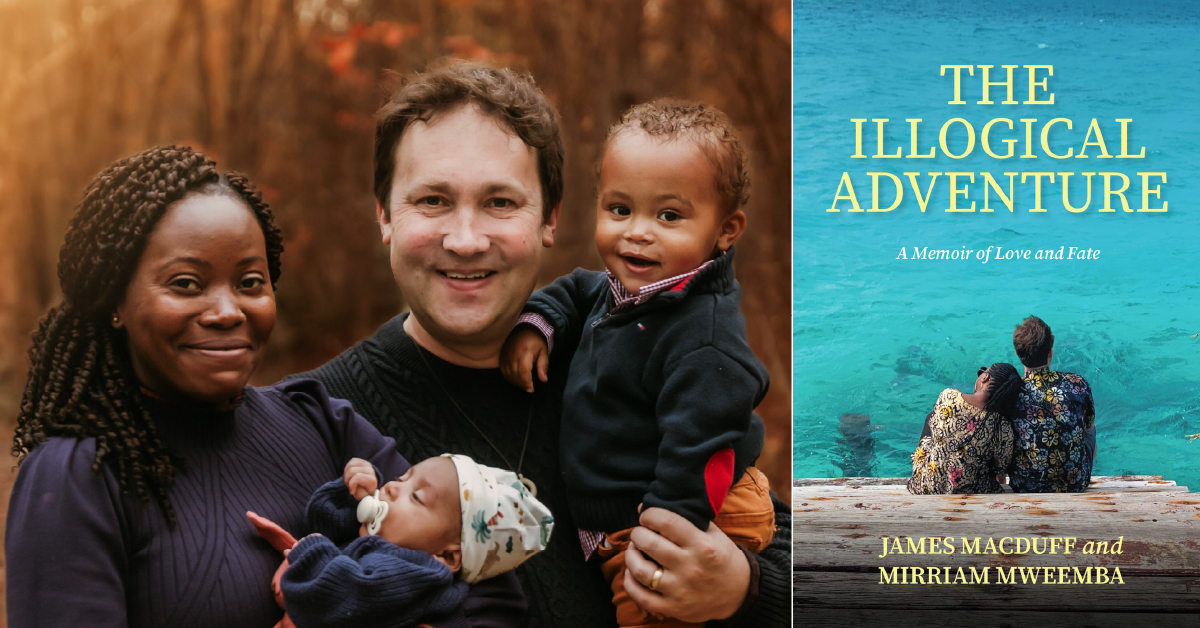
    Writing The Illogical Adventure focuses on the craft challenges and ethical questions involved in co‑writing a memoir with two distinct voices. Rebecca continues her conversation with James MacDuff, who—alongside his wife, Mirriam Mweemba—coauthored The Illogical Adventure. What began as James’s solo MFA writing project about travel evolved into a shared memoir when he realized the story only worked if it fully included Mirriam’s perspective.
    James describes the collaborative process they developed to protect authenticity and trust: recorded interviews, drafting in Mirriam’s own words, and an iterative editing workflow that allowed her to set clear boundaries around privacy. He reflects on how feedback from mentors and early readers shaped the book’s structure, helping them balance the two voices and gradually weave them together as their lives converged. The episode also explores the emotional labour of memoir—deciding what to disclose, how to portray family and friends fairly, and whether the work is worth the personal cost when publication is uncertain.
    The conversation closes with a practical look at publishing, as James explains how a local creative nonfiction prize offered a realistic, accessible path from manuscript to book—underscoring the importance of small presses in bringing new voices into the world.

    My review of The Illogical Adventure.

    Support the podcast by purchasing the book using one of the affiliate links below.

    A rounded‑corner button with a beige background. On the left, a pink and yellow quill is dipped into a dark blue ink jar. A detailed dark blue and medium‑blue desk microphone sits beside it. A small pink heart appears above the quill. To the right, hand‑drawn dark blue text reads “Be a Patron of My Art.” The illustration has a soft, handcrafted indie style.

    Support my Podcasts using Patreon. Your $3 per month helps the podcast stay live, supports me as an Artist, and helps me access other funding.

    Transcript

    [00:00:00] Rebecca: What happens when you realize the book you are writing would be a much better story if it included two voices? How do you weave together the voices to create a balanced story?

    [00:00:17] Welcome to Definitely Not Famous, More Extra than Ordinary. I’m Rebecca Hoag, your show host. In this podcast, I seek out memoir authors who are not celebrities, at least not yet, and interview them about their books. I share stories that are more extra than ordinary.

    [00:00:38] In this episode, I continue my interview with James MacDuff, who, with his wife, Mirriam Mweemba, co-authored their memoir, The Illogical Adventure: A Memoir of Love and Fate. Our conversation today focuses on writing craft. The memoir didn’t start as a neat, finished love story. It started as a writing experiment and then turned into a collaboration that required trust.

    [00:01:04] James explains how the book moved from an early idea, capturing his own travel experiences, into a two-voice narrative that could hold both his perspective and Mirriam’s. He describes the practical method they developed to protect her voice, recorded conversations, interview-style prompts, drafting from her words, and a careful back-and-forth editing process where privacy boundaries mattered as much as the narrative momentum.

    [00:01:32] James: I, I started out this project at the King’s as a Master of Fine Arts program in creative nonfiction writing, and I started out the program thinking this was more kind of my own project and it would be an opportunity to put some of my own backpacking travel experiences down. And I, as part of that program, I did do elements of the story and some of the background did make it in to the part one of the story, you know, prior to meeting, meeting Mirriam, how we ended up being, becoming who we are and that sort of, those sort of aspects.

    [00:02:02] But certainly there were elements when we started looking at, well, what stories actually connect to the book, a trip to India or a trip to Mexico was maybe compelling and meaningful for a different aspect of, of my life, but didn’t really have a connection to the story of Mirriam and I. That got left out.

    [00:02:20] The other part that I would say, Mirriam is not here unfortunately, but having done some of these interviews together at different times, one aspect of our writing process was I had been in the program and I had had a long standing interest in writing. Mirriam, not so much, but we learned pretty quickly, I think, as I was trying to come up with the angle of the story and telling our story, that coming just from my perspective alone would, would not be an effective or a compelling opportunity for the reader to really get to know us and was concerned about trying to speak for Mirriam too much in the process of writing.

    [00:02:58] So- What we agreed to do was that we would have Mirriam tell her side of the story, and the way we did that was late at night or on drives or when the kids were asleep, I would turn on a recording and, and I’d interview her. I’d ask her questions about the past or especially elements of where I wasn’t there at the beginning.

    [00:03:17] And then other times we would start talking about what do you remember about this meeting? And, and then I would go back through and type out using her words and trying to keep it in her words as much as possible, her sections, and then present that back to her and she would review and say, “Well, I wouldn’t say something like that,” or, “I don’t…

    [00:03:35] I’m not comfortable putting that part in,” or there would be that level of editing and back and forth that we would go back to the, to the point where I, I think we’ve had success in capturing the two different voices, where we didn’t just go off and kind of separately type up our own sections and then put them together.

    [00:03:51] It was very iterative on that side of things. And you asked the question about what gets cut. There were times when I found Mirriam shared some personal story or aspect that I particularly found intriguing and thought the readers might, and on reflection on… And you know, and this is always an issue you have with memoir of how far do you go in terms of disclosure and other things, and she just felt, “No, I’m not really comfortable with that getting out into the world,” and whether for whatever reason, and I made it very clear from the beginning that we would certainly not include anything that she didn’t want to do.

    [00:04:25] When you’re writing your own memoir, on my side of the story, I didn’t have that conversation with anyone. I processed it all internally and was able to just do that, right? She had to have a level of trust in me in sharing that she could speak openly and freely about and not worry that we would get into it.

    [00:04:43] But there were some, and not to give details or anything, but there were moments where we had, “Oh, but really? You don’t wanna put… That’s quite a, that’s quite good, and it, it’s, I think people would love to hear it.” But she just said, “No, there’s certain things that we’ll keep to ourselves.” I said, “Fine with that.”

    [00:05:09] Rebecca: Turning live experience into a book is rarely a straight line. It’s drafting, rethinking, and learning how to shape memory into scenes a reader can feel. James describes how formal training and outside readers help the project evolve, pitching the idea, testing structure, receiving feedback about what felt lopsided, and revising until both voices carried equal weight.

    [00:05:34] He explains how the book’s structure changes as their lives converge, starting with separate perspectives and then weaving more tightly together, so the reader experiences not just what happened, but how the two separate stories become one

    [00:05:49] James: When I think about this book, it’s a project that I started in my own mind, that I had these travels that I wanted to wr- write down and have preserved in some manner.

    [00:05:59] I’d always kept journals. I did a lot of backpacking and a lot of solo travel where I… f- friends would drift in and out, or I would meet new people. But a lot of it was an introspective-type journey, and I had this box of books. And when I came across the King’s MFA program, it allowed for exactly what I thought, “This is the– I need some assistance.

    [00:06:18] I need some guidance in how to put these stories together and some instruction.” And, and it’s, you know, a chance to go back to school, but while keeping my current job, ’cause the, the program, for those who aren’t familiar is, it’s a low residency. You spend two weeks in the summer in a, in an intensive environment every day doing seminars and listening to speakers and, and, and participating in workshops.

    [00:06:40] But then you go off on, on your own time, you do your writing, and you work one-on-one with a mentor who reviews your work. It does allow, and most of the students in the program have a separate job or have separate work stream or something that they’re doing. That really gave me the impetus to do this.

    [00:06:56] And then I found myself living part of the story. As my first year ended at the COVID, I decided, “Well, I learned a lot. I still don’t know exactly where this story is going. Why did people wanna read about James’ travels, and how do the loose pieces connect? I think I’m gonna take a break, partly because COVID as well.

    [00:07:14] Life is upside down, and I don’t know what’s going on with Mirriam. I don’t know what’s the future is with work. I don’t really know anything, and I don’t wanna continue writing in this context and pursuing.” The pro- the, the course instructor said, “No, absolutely. You can put your go on an indefinite leave.

    [00:07:29] You’ve done the f- first half. You’ve handed in everything,” ’cause the semester ended in March. “You can come back in year two, whatever suits you.” I went off, and Mirriam and I had this adventure, and then all of this stuff was working, and then we had our first son. And it was at that point, Mirriam had always been encouraging of my writing and had been saying, “We– now that we’re settled in here and everything, we sh- you should go back to the course bef- at some point, you won’t be able to go back.

    [00:07:55] You have to have some opportunity.” We started looking at it. With her support, I went back and I thought, “Well, now I could use a lot of what I did, talk about myself in the beginning, and then, you know, we have these other trips that I’ve taken,” and it does have a bit more of a, an arc and a story of people meeting and then what did they do next, and where do they go from there?

    [00:08:17] And who were they when they met and… But it, it had a nice flow, and we would be encouraged to do your pitch as part of the workshop when I got back in, and I was trying to explain, like, how do you sell the book? How do you make it intriguing for folks? And as I was doing that, it was… that’s where it really became clear to me that people were more interested or as much or more interested in Mirriam’s journey Than in my own.

    [00:08:43] I was part of the story, and I, I felt it would be difficult to try to just talk to Mirriam and then write it in my own words what, you know, about her life. That’s where the epiphany went on and said, “Well, Mirriam, if you’re willing to put in the time and effort to have this be a story that goes back and forth between your perspective and my perspective, for the reader it will be much more fascinating to get a glimpse of both lives and where the two people were coming from and told in different ways.”

    [00:09:15] I was very concerned that it would come across as me having written, and my own biases and my own style being imposed on it, but we thought, let’s give it a go. And with the help of the program, like it’s not something as writers who are listening to this know, but I think it’s even more… You know, I’d read a lot before I started the program, but I didn’t have as much background into the writing side of things.

    [00:09:39] But it’s very… It’s… No one sits down and writes this beautiful story and then people read it. People are always providing, workshopping it, constructive, getting a sense of what the initial readers are thinking. What’s confusing? What makes sense? What’s missing? What doesn’t need to be included? And taking that feedback and then, you know, coming back with your second and third drafts.

    [00:10:00] That’s responding a little bit in a dialogue with a reader, so that when the readers actually get it, they get the benefit of having seen a final version that’s had a lot of more than just the author who’s in it. Without having that ability, and Ayelet Tsabari was my mentor who I worked most closely with at the end on this with the idea of doing it with Mirriam, and some of the work we ended up doing with Ayelet was Mirriam’s parts.

    [00:10:26] And the very first feedback that she gave was, “I don’t know if this is gonna work,” because your stuff, it’s… Some of it had been more polished and had been gone through, and she found it to be imbalanced and thought, “I… Maybe there’s got a… Maybe there’s another way to explore.” And I think it was just ’cause it was our first collective attempt, Mirriam and I, of trying to get, you know, her side of the story out, and was taking that feedback and then getting better at the process of my interviewing and Mirriam really taking the time to reflect on the memories and, and, and the…

    [00:11:00] I- she used to get upset at me. Like, “I don’t remember what it smelled like. I don’t remember what it … You know, what it… What I was feeling at that time. It’s so long ago.” It’s like, yes, but that’s… If you take the time and go through, then maybe something will, will be triggered. So that was a process that we ended up working through it to the point where at the end of the program, we still had a, a lot of the book left to do, and we hired Ayelet to help with…

    [00:11:24] Kind of be a… Just to do a critique of the book from beginning to end when it was finished. And it was enormously valuable to have that, an editor-style relationship with someone who could point out where it sound… Like Ayelet would say sometimes, like, “This sounds like you’re transcribing.” Rather than creatively writing.

    [00:11:42] But it jumps out at, and having an independent person do that. And I had one other friend, Matt Bears, who was a great reader as well, and he’s not formally in the program or anything, just a friend of mine, curious, also a big traveler, and he would give me feedback as well, very timely basis, and it’s important for writers to have that, to have those friends who really show an engagement.

    [00:12:03] You’re not feeling bad about, “Hey, here’s another chapter. Would you please take a look?” He was asking me about it. We were working on ideas, and he would always be very quick to read and give advice. And it was even only having two people who were really immersed in it, it was amazing how often they had similar feedback, and they both coming at it from…

    [00:12:22] You could tell when they were both in agreement of, “I don’t know why you’re telling this part of the story. Just drop that,” or, “I wanna know more about what Mirriam was thinking there or what James was doing there. You can’t just skip over that scene. That’s a big moment in what’s going on.” And then you’d say, “Okay, well, if those two are both screaming that at us , then we probably anybody else who picks up the draft would say the same.”

    [00:12:46] Then we would go from there. But it was very time-consuming for that purpose, and it was also the sections with Mirriam would take longer because they, I wasn’t just able to do it sitting down on my own, and we didn’t wanna have a book that was 75% my side and only 25% ’cause it would be lopsided. There was that element to take into consideration as well.

    [00:13:07] But in the final version, I do think it does a nice job of going back and forth, and it lined up nicely to where we would go through the same scene, but you’d see the first part of it through my perspective and then from Mirriam’s side. And what I also enjoyed about the final version of it is the way that in the, in the beginning, it’s like a chapter of me and a chapter of Mirriam, and then as we get closer, and of course, we’re in the same scenes together, we weave it in a little bit more.

    [00:13:35] Maybe one chapter becomes like the first half is me and the second half is Mirriam, or the first half is Mirriam. And then in the later chapters, it’s a number of perspective changes that take place, and I think that’s an interesting, it makes the book a little more unique than just a typical one-person told memoir.

    [00:14:03] Rebecca: Memoir asks you to do more than remember. It asks you to decide what belongs on the page and to live with how those choices land with other people. James reflects on the emotional and relational weight of revisiting the past together, the uncertainty of whether all that work will ever be published, the difficulty of naming family and friends in ways that feel fair, and the tension between telling an honest story and protecting the parts of life that should remain private

    [00:14:33] James: One of the things that as a memoirist, you’re going back into the past, often into excellent, wonderful memories.

    [00:14:39] O- other times may be more difficult or just questioning decisions that you might have made or looking at your life in a different way and doing that kind of with someone. And there were times when we thought, oh, do we really want to be doing this? D- is this a project we wanna continue to see to fruition?

    [00:14:56] And of course, we didn’t know if at the end of the, our work, we would be able to find a publisher and get it out into the world. But you don’t have that certainty at the end that as a first-time writer that it will go anywhere. There’s all that effort and work that you’re going through and having these types of conversations and recalling, uh, the past.

    [00:15:14] It is, it is difficult, and then you have those questions about, do you wanna put this in? Do you wanna take that out? And back and forth and is this… Because we’re talking about our families, and we’re talking about our friends in some cases, and you just, and you don’t really know how it will be viewed.

    [00:15:30] And of course, Mirriam being, as I said, from Zambia has come over now to Canada and is making her life here, but was just getting to know all of the people that I’ve known for many years. So there’s that, that aspect of- on your mind as well. What will people– how will their view of me change based on this disclosure of additional details about my life that they might otherwise not be familiar with?

    [00:16:02] Rebecca: Writing the book was one challenge. Getting it into the world was another. And James found a path that many emerging writers don’t realize is available. James explains how a local creative nonfiction prize and a small press created a realistic route from manuscript to publication. He talks about researching publishers, writing towards a deadline, and why prizes like this matter.

    [00:16:26] They offer unknown writers a chance to be read seriously, edited thoughtfully, and supported through the practical work of production without the need for an existing platform.

    [00:16:38] James: As part of the King’s MFA, you’re encouraged to think about the publishing side right from the beginning as well, and there’s, there’s a seminar that is the January week focuses on the publishing and the business side of the equation.

    [00:16:52] And one of the assignments I remember Kim Pittaway having us do was to think about potential publishers for your work, which requires you to do a little bit of research if you’re not familiar, as I wasn’t. And it so happened that it was in that research that I noted the Pottersfield Prize for Creative Nonfiction Writing.

    [00:17:10] Pottersfield Press is a small local press in Lawrence Town Beach in Nova Scotia, who has– that’s been in, in business for quite some time, run by Lesley Choyce, who’s, uh, published or has written himself over 100 books. And anyway, they have been doing for a number of years a prize in the creative nonfiction, for creative nonfiction.

    [00:17:31] So a story between 30,000 and 150,000 words. The, the deadline is every April 30th, and they let the winners know in June, by July 1st, I think, and then you’re with the book being published in the following year. Seeing that and looking at some of the winners, a lot of them had been travel-related, a lot of them had been memoir-esque or some form of memoir.

    [00:17:54] I really saw immediately, and this is again before I knew the full range of our story, that this is an opportunity for a no name, no previous writing background or publications, an opportunity to have it reviewed and potential for it to be published in a short turnaround time. Like I think a lot of times you look at the submissions, you, you say, “Okay, well I’ll submit here and six months or eight months will go by,” and you don’t even know if anyone has even opened your draft manuscript.

    [00:18:24] And the idea that you could submit by a certain date and then you’d know two months later whether you were the winner. And it was the– They have two prizes and basically they’re the same. You get published and you get a small advance on the book upon signing the contract. But then the book is published very soon thereafter and it’s, it’s an opportunity to work kind of directly with them.

    [00:18:46] I had that in mind right from my first year as that may be an opportunity to do this because you wouldn’t want to write it and then be spending years trying to ship it or shop it around and do that. We actually ended up kind of writing to that deadline. We, the, my– I finished in the program. My second year I joined a little out of order for the second year in January, but I finished by December.

    [00:19:09] But then I knew that there was still a significant chunk left, but I saw that April 30th was the timeline. We had a trip planned to go to Zambia in early May. I said, “Let’s try and do it to that and submit it by April 30th and then we’ll wait to see what happens.” And, and we were overjoyed when we found out in late June of 2024, I guess it was, that, uh, we were the winners and that then work started on the, very quickly with the, with the copy editing and the cover design and trying to figure out that whole world of distribution and everything else as well.

    [00:19:44] But it was– We’re so indebted to Potterfield because without offering that kind of platform to unknown writers with no other background or no real commercial plans or ideas, it, uh, it just, these books would never make it out into the real world.

    [00:20:12] Rebecca: Thank you, James, for taking the time to talk to me. I’m sure listeners will agree, James and Mirriam’s illogical adventure is more extra than ordinary. You can support James and Mirriam and this podcast by purchasing their book using the affiliate links in the show notes.

    [00:20:38] Thanks for listening to Definitely Not Famous: More Extra Than Ordinary. This podcast is brought to you by me, Rebecca J. Hogue, the host and the producer. To support the show, please consider becoming a patron of my art using the Patreon link in the show notes. Alternatively, you can purchase the books using the affiliate links also located in the show notes.

    [00:20:59] You can learn more about the podcast on the website definitelynotfamous.com.

  • Illogical Love with James MacDuff

    Illogical Love with James MacDuff

    In this podcast episode, Rebecca speaks with Halifax lawyer, lifelong traveler, and memoir author James McDuff about the extraordinary love story at the heart of The Illogical Adventure: A Memoir of Love and Fate, which he co‑wrote with his wife, Mirriam Mweeba. James recounts how a chance encounter in Cape Town at the end of an ambitious voyage led to a long‑distance relationship shaped by travel, cultural exchange, and timing, and how the COVID‑19 pandemic—rather than pulling them apart—accelerated their commitment. Through stories of meeting Mirriam’s family in Zambia, navigating lockdowns, proposing abroad, marrying during a global crisis, and eventually building a family in Canada, the episode explores how a single, illogical decision can quietly redirect an entire life.

    My review of The Illogical Adventure.

    Support the podcast by purchasing the book using one of the affiliate links below.

    A rounded‑corner button with a beige background. On the left, a pink and yellow quill is dipped into a dark blue ink jar. A detailed dark blue and medium‑blue desk microphone sits beside it. A small pink heart appears above the quill. To the right, hand‑drawn dark blue text reads “Be a Patron of My Art.” The illustration has a soft, handcrafted indie style.

    Support my Podcasts using Patreon. Your $3 per month helps the podcast stay live, supports me as an Artist, and helps me access other funding.

    Episode Transcript

    Rebecca:

    Why would an adventuresome lawyer leave Halifax and fly halfway around the world during COVID? Where’s the logic in that?

    Welcome to definitely not Famous. More extra than ordinary. I’m Rebecca Hogue, your show host. In this podcast, I seek out memoir authors who are not celebrities, at least not yet, and interview them about their books. I share stories that are more extra than ordinary.

    My Guest today is James McDuff Halifax Lawyer, Maritimer, and Lifelong Traveler. He with his wife, Mirriam Mweeba, are the authors of the Illogical Adventure, a memoir of love and fate. James sets the stage for our conversation outlining his maritime roots, the way he sought adventure, and how his adventures became the backdrop for meeting Mirriam and eventually building a family while still making room for travel.

    James:

    My name’s James McDuff. I am, uh. What, 47-year-old lawyer work in Halifax? I am AM a Maritimer. I was born here, grew up in Moncton, went to Queens for my undergraduate in Ontario, and quickly realized that, uh. You know, I wanted to be back in the maritime, so I went to law school at Dal and I, I work here in Halifax at McInnes Cooper.

    Probably one thing that most folks would say about me is that I love to travel and I have had, since I’d say maybe my early twenties, a, a strong addiction to getting out on the road and, and have been able to, and somehow manage a, you know, have a career, a professional career, while also, um. Using it as a springboard in between hearings to travel to all the continents of the world and over 60 countries.

    And so, uh. That is a passion of mine that continues on. Now my wife, also a fellow traveler, and we met in, in Cape Town on the road and and now are building our life here with two young toddlers and continuing to pack them along and teach them the love of travel as well.

    Rebecca:

    James’ life was full of more extra than ordinary adventure. This illogical adventure begins far from home after an ambitious trip that ends in Cape Town, South Africa. James tells the full cinematic how we met story, the long voyage that brought him to South Africa, the last night in town, decision to linger a little longer, and the moment he noticed Mirriam sitting alone and decided to take a chance.

    He also gives us a glimpse of Mirriam’s view of that first meeting, why she was there, what she thought she was seeing, and how a brief conversation turned into a connection strong enough to survive the distance.

    James:

    Well, the prologue of the book is the opening meeting in Cape Town. I always laugh because when I tell the story to folks about how Mirriam and I met, I have to start by saying, in February of 2018, I took a tall ship, sailing cruise from the south of Argentina to Antarctica.

    And people say, well, I thought you were talking about how you met your wife. Like what is this story about a tall ship going Antarctica? So I had been. Planning this trip for quite some time and trying to figure out how I could take a few months off work and the day came in 2018. I was intrigued by this trip for a whole bunch of reasons with the sailing and the tall ship and the chance to get to Antarctica, but it was also a transatlantic cruise, so it left from the south, south of Argentina, Patagonia area where I had never traveled, and it arrived in Cape Town in South Africa, also a country I’d never.

    Visited before, and so it hit a whole bunch of different boxes for me to, to go on this trip. So I went on this 50 day sale, had a lot of time to think about the future and all, and my career and what, what I wanted to be doing. I was just turning forties. All those midlife thoughts come into mind. And we docked in Cape Town and I had planned to spend one week in Cape Town before flying back home through Dubai and then London, and then home to Halifax and so on the last night.

    That I was in Cape Town. I went to a pub to watch my favorite team Arsenal play. They, they were playing against their hated rival, Manchester United. We were. A last minute goal by the other team left me. I was planning on going out for a walk and just enjoying the night, but a last minute goal by the other team left a sour taste in my mind.

    I had stuck around for another beer and was chatting to a local guy, and over in the corner there was this beautiful woman sitting by herself out of place in the sports bar, and I thought. You know, I should, I’m only here like one more night. Sometimes you always have those questions of, should I go over and say something?

    What would you say? Hey, or other things like that. And for some reason I ended up going over and asking if I could sit down and, and when from Mirriam’s side of the story, I had this gigantic caveman ask beard at the. I had shaved for like five months and my hair was scraggly and you know, so I would’ve been quite the, quite the thing to look at in terms of probably she wouldn’t, she saw me, she didn’t expect, oh well this is my future husband coming over now.

    She was on the other, she worried about the poor Canadian white guy over there who may be talking with some locals. He shouldn’t be talking to because he might get, he might get, they might have designs on taking his wallet or doing something. So she was looking out for me in a more caring way than I, than I had in my mind at the time.

    But when I sat down with her, and the only reason she was there was because her taxi driver, who she used was late. And so she just, she’d never really been in that bar before. She didn’t know why she went in, she was there. And so she was waiting for her, her driver. And as we got to talking. We thought, okay, you know, maybe we should go to a different spot.

    If your driver’s coming and you know, the Cape Town, I’m just here as the, as a tourist, we could go to a different spot. And she had a, a place in mind this neat little restaurant slash slash bar that, that we went to. And that that point I got a chance to really talk to her a little bit more and tell her about how I had got to Cape Town and on my phone I had all these videos of penguins and whales.

    Big seas and icebergs and things like that. At that point, I think she became a little bit more, who is this person who wasn’t expecting any of this? And, and we really just hit it off and, you know, to the point where we exchanged contact information and, and said she was getting ready to go work in Europe on a cruise ship.

    I was going back home to Canada to get back to my life as a lawyer and continue to think about. But I still had the idea of traveling and thinking, well, I, I’ll be in Europe probably, and not too long maybe we could meet up and see, see what happens. But, but yeah, I, at, at that point, whether or not we would ever meet again was highly questionable.

    But, but the sparks were there from the beginning.

    Rebecca:

    When the pandemic arrived, it rewrote everyone’s plans. But for James and Mirriam, it also accelerated a decision that they couldn’t postpone forever. James walks through the chain reaction, COVID set off in their long distance relationship, a canceled reunion, months of uncertainty, and then a bold decision to meet anyway when a narrow travel window appeared.

    He describes the mixture of fear and commitment that carried them through restrictions in quarantines. How the unusual season created space for deeper time together leading to a proposal, a wedding in Zambia, and the complicated next step of navigating immigration so they could build a life in Canada.

    James:

    It’s strange to think about how COVID was such a devastating impact on, on relationships and, and families keeping people apart, keeping people locked down. And for us it was, it was the opposite or it, it ended up having the opposite impact. At first, we were planning to meet. So we had met a number of times through, so we’d met the first time in April, 2018.

    We ended up meeting in Europe a few times. We met in Africa once, and I was planning on, and I had gone to visit Mirriam in Zambia. And so we were planning on meeting in Johannesburg in March of 2020. At that point, I think we were start talking more seriously about what do we have here and are we gonna make some changes to our, to one another’s lives to accommodate some type of relationship that’s more than just a long distance sea and every few months.

    But of course, as the, as we were getting ready, I think our flight was like March 25th or something like that, a week. Before, a week after everything ended up shutting down. So that trip was obviously canceled. I went home, my parents live in Moncton. I was just have a, at a condo, like one bedroom, you could see the writing on the wall that this wasn’t going to gonna end any time soon.

    So rather than live alone for that time period, I thought I would travel home and spend the time with my, with my parents. And I was lucky that I got across the border before even the New Brunswick Nova Scotia border closed. And so Mirriam was, was in Zambia. And, uh. We spent a lot of time thinking about how are we gonna meet now?

    When is this gonna end and what, what, what’s that going to look like? And we started, we chatted a lot on the phone and she had a chance to kind of video calls with my parents. She hadn’t been to Canada by at that point yet. And so we were talking about all these things and then we, in my searching of what to do and, and how things might work, we found that KLM was flying flights to Tanzania.

    Ethiopian Airlines was flying flights to Tanzania in the summer, starting in July of 2020. And so we looked into it and thought, are we crazy? Is this, should we do this? Is it safe? We started reading all about all of the, the risks for each other and will this, what would we do if we got there and are the places opening?

    And, and Tanzania is one of the few countries that, for tourism reasons and other reasons of skepticism among people in their government. They thought were going to be on the front end of allowing people and the flights were available. So we thought, let’s take this chance. But we didn’t share very widely.

    We sh we told our families that we were going and, and they shared their concerns and asked how we were gonna protect ourselves, what were our contingency plans, everything. And there was a part of me that thought the flight is never even gonna go ahead, just get canceled. So it was kind of a dream that you get on this plane.

    It was mostly empty fly to Toronto, and then the airport was empty, and then you fly to to Amsterdam and then down and Mirriam’s went, took her through Ethiopian Airlines and she had the same conversations with her brothers who were taking to the airport. Are, I don’t, they’re, we’re some working in the government.

    No one is traveling. What are you doing? Is just important. Like, but they could see that we were keen on doing it. And, and they, they trusted us and I was working as everyone was from their computers at home. So I thought, well, I’ll just work from my computer on the wifi and the hotels, and I don’t have to tell anybody.

    Everybody just assumes you’re where you are. So, so that’s what we did. And, and the flights went off without a hitch. We spent most of the time just on our own, like when we got to the hotels and things, there wasn’t a lot of interaction, but some of the places. They were just reopening. So the tourism industry, the hotels, the tour guides, other things that we were doing we’re so happy to have people coming back again.

    And so we were doing all the precautions. We had to do the COVID tests, and then of course when we returned home, we had to do the, the quarantine for two weeks at home. And so we, we followed all of those. Protocols and, but it enabled us other times when we would meet, we could maybe meet two weeks at a time, ’cause I’d have to be back for work or something like that, or Mirriam would have other obligations.

    But with COVID we didn’t have those. And it gave people the opportunity to work remotely in a way we’d never had before. So after the success of the. Trip in Zanzibar where I ultimately ended up proposing as part of that trip again, to kinda say, let’s, we’ll figure this out now that we’ve managed this kind of miracle.

    But then to go back and, and then start thinking when will the wedding take place and what will that look like? And then how can Mirriam get to Canada with all of the immigration restrictions, just particularly foreign African. But in the time of COVID, no one was coming at all, so we had to try to figure out how to.

    How to manage that. And so we, we decided to get, Zambia wasn’t open in July, but they were opening in November. So we went back in November. I went back in November and we organized the wedding among the. It’s a small wedding with Mirriam’s family in Zambia and a honeymoon in Zambia, where Livingston is a great place with drafts and elephants at the honeymoon.

    And so, and then of course I returned home with all the documentation to try to start the permanent residency process for Mirriam and during quarantine again. So it was a lot of travel and concern and, and joy and fun about, you know, having been able to pull off these trips and then the relief of getting home.

    Safely and, and just relaxing and being out of touch with the world for to the two weeks that you have to just live in your own, in your own space. And there was an element of those. Just decompressing after, after traveling around the world in a stressful time that I also ended up coming to enjoy as well.

    But all of the time working and being able to, to do that with the support of colleagues and clients who became aware of what was going on and the started to, you know, bearing more broadly as the world was slowly opening up that these were the trips that I was doing and, and so it all, it all managed to work itself out.

    Miraculously,

    Rebecca:

    a relationship becomes real in a new way when you step into each other’s families and into the cultural expectations that come with them. James shares what it was like to travel to Zambia and meet Mirriam’s relatives. Moving from the tourist friendly world of Victoria falls towards the place where she grew up.

    He describes the warmth of the welcome, the small moments of navigating language and unfamiliar routines, and why the visit demonstrated the depth of their relationship. He shares the context of Mirriam’s family, how she had long prioritized travel and career over the pressure to settle down and have a family.

    So bringing a partner home signaled to everyone that this time was different.

    James:

    When I made the trip to Zambia at the end of 2019, we didn’t necessarily have a plan either way. We’d never really talked about whether or not we would go and whether it would be just a trip of the two of us and the Livingston, where the Victoria falls are and the Zambia River.

    A, an excellent tourist destination for a backpacker to a city to wanna visit and then that we would have the chance to stay. But it, I think in the back of both of our minds, we knew that it was only a few hours to where Mirriam grew up, where her mom and some of her sisters are, and then her in the capital city, her brothers.

    So she comes from a, a large family. So we knew that that possibility was there, but we weren’t either of us. Kind of pushing it. But after a few days in being in Zambia and kind of reconnecting again as we hadn’t seen each other since a previous trip a few months earlier in Europe and, and seeing like, yeah, this is the kind of bond that you know is more than just a travel fling or something.

    Let’s see where it might go and. I believe that it, I mentioned to Mirriam at one point I’d be open to going if you, if, and seeing where you grew up and seeing your family if you wanted to do that. And she, I could see that she had been waiting for me to express that interest. She didn’t wanna. You know, put it on me to say that, but it was clearly on her mind as well.

    So she was very happy to hear that. And then quickly we made the arrangements and it was a really nice welcome for me because Mirriam was the traveler among her group of brothers and sisters. She was the seventh of eight and, and also had some, some stepsisters and step stepbrothers as well. And so she, but she was the one who had, from an early age, decided to express an interest in traveling and had traveled and gone to Europe and everything else.

    So, and she had never. She’d always put that aspect of her life first, a little bit against the cultural stereotype of you’re expected to get married at an earlier age and start your own family. And she avoided those pressures that she had to face from time to time in favor of focusing on her own career and her own, on her own issues.

    So when she brought someone. From another culture home, it was already a sign of, wow, this must be something serious because she’s not prone to do this. So from my, I kind of realized this later. That I got this real like, joyful welcome and you know, wow, this is finally going, you know, this is, this is nice to see, and everything else.

    So it was kind of a little kids coming, running around and it was, it’s like a bit of a farm type atmosphere there. So there were cows and chickens and things, kind of the rural environment. So it really was a nice. It was a nice moment to see, you know, the language gap was a little bit, they speak English in Zambia, but also like local Tongan is the language in Mirriams village of Otoka.

    So we were kind of navigating that and just a little bit of the kind of looking on both sides, who is what’s going on? But it really kind of cemented. You know the idea that by the end of that trip and then we subsequently traveled through to the Capitol and met up with a few of Mirriam’s other siblings and had dinner with them and had a real chance by the end of it, that was clear to me that we would have to continue.

    And start trying to figure out ways where we could spend more time with each other rather than only a few weeks here and there on the rest of the time being on the other side of the world. So that’s kind of what sparked our discussion. Okay. When’s the next time in March and Johannesburg. And then we’ll.

    See what we can do. Then little did we know that COVID would happen and then as I say, the the steps kind of worked themselves out from there.

    Rebecca:

    Figuring out a title is often one of the biggest challenges an author faces. James shares how a reading assignment led him to align about how love is an illogical adventure and why that phrase captured the heart of their memoir. He connects the title to the book’s central theme. A chance meeting can redirect an entire future, new country’s new commitments, and an unexpected family far out of proportion with a small moment that started it.

    James:

    I give credit to the King’s MFA because we had an assignment, I think Dean Jobs said, give a list of the top 10 nonfiction books or something that you, but it’s an assignment that makes you think about what are your favorite nonfiction books and do a little bit of a. Kind of, I don’t know if it was a one page or a half page summary of each, just to get you thinking about those things.

    I always love those assignments because they were never too onerous in terms of the amount of work, but they, they really did make you think and, and they were enjoyable because you’re thinking about, okay, well, which books did really move me at different times in my life. And one of them was, travels with a Donkey in Spain by Robert Louis Stevens.

    And as part of the assignment, I thought, I haven’t read that for so long. I’m gonna go back and read that again. And I did. And to the point where I was like, wow, this guy’s great. I always loved Treasure Island as a kid, and Robert Louis Stevenson, when I later found out he had did this other writing, that was good too.

    After reading the travels with the donkey again, I looked into some of his other nonfiction work that he had written, and I came across this essay that he’d written called On Falling in Love. And at this time I was far enough along that I knew where the story was. I knew it was gonna be this Mirriam and I meeting, and then the story of ourselves and then and concluding after we Mirriam’s come to Canada.

    I knew it was a love story, but I was desperate to try to figure out a title. And titles are so difficult. Um, and in this, in this essay, there was a, there’s the quote, falling in love is the one illogical adventure. And I don’t remember all, I should have the quote memorized, but I don’t. But it’s something about it being the one thing that’s in this trite and reasonable world that’s supernatural.

    And I just looked at that and I thought, oh, that could be it. ’cause adventure. There’s a lot of fate involved, theological aspect of it like that is great. Then I had to think, okay, Google. Who else has uses title? And I was overjoyed to find out that I couldn’t find any other book called Theological Adventure, and at that point I thought.

    Yeah, this is the number one candidate. We hadn’t decided on it, but it was really that the more we talked about it and I talked about it with Mirriam and we tested it, we didn’t ever really have a strong contender against it because other thing about across the ocean or like it was all it, not, nothing really fit that neatly.

    And we had this beautiful epigraph like to open the book as well and it really communicates, I think the. Um, the nature of it, which to us is travel has been an adventure, and this is kind of the greatest adventure of our travels, was meeting each other and had such a, the. The other aspect of the quote is about how the, the effect of falling in love is so out of proportion with the, with the cause.

    Like you fall in love and then everything in your life changes and goes in a certain direction that none of it would happen. Like would I have ever visited Zambia in my life? Would I have ever. Gotten married, would I have had children without meeting Mirriam? I had not up to that point, and I wasn’t, it wasn’t something that I was banking on doing, but so you have a whole nother life now that is because of this one chance meeting that if our paths didn’t cross, then unlikely they would’ve somewhere else.

    So. What, what would’ve happened for either of us? Who knows?

    Rebecca:

    Thank you, James, for taking the time to talk with me. I’m sure listeners will agree, James and Mirriam’s illogical Adventure is more extra than ordinary. Stay tuned on the next episode of Definitely Not Famous. I’ll continue my conversation with James. We’ll talk more about writing Craft and how he was able to co-author the book with Mirriam.

    You can support James and Mirriam and this podcast by purchasing their book using the affiliate links in the show notes.

    Thanks for listening to, definitely Not Famous. More extra than ordinary. This podcast is brought to you by me, Rebecca j Hogue, the host and the producer. To support the show, please consider becoming a patron of my art using the Patreon link in the show notes. Alternatively, you can purchase the books using the affiliate links also located in the show notes.

    You can learn more about the podcast on the website. Definitely not famous.com.

  • Pedalling Ultra Fast with Meaghan Hackinen

    Pedalling Ultra Fast with Meaghan Hackinen

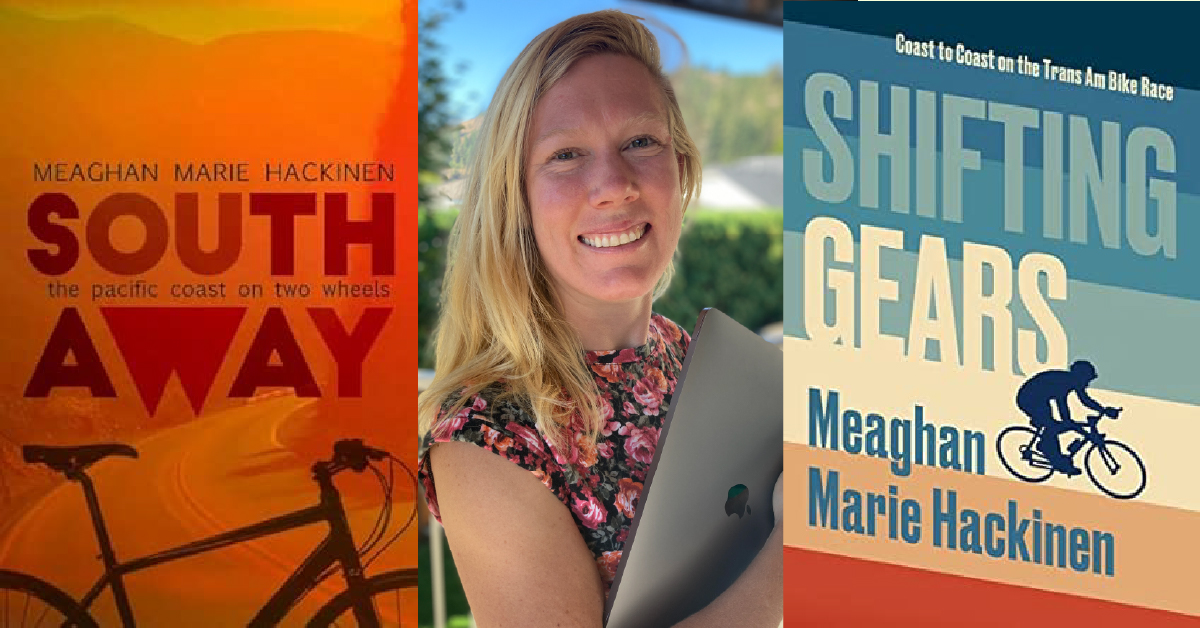
    In this episode of Definitely Not Famous, I interview Meaghan Hackinen, an ultra-distance cyclist and author of two memoirs, South Away and Shifting Gears. Meaghan shares how her cycling journey began with a solo ride along British Columbia’s Highway of Tears at age 24, evolved through cycle touring the Pacific Coast with her sister, and eventually led her into the male-dominated world of ultra-distance bike racing — including winning the 2024 Tour Divide. She reflects on what it means to be a woman in adventure sports, the importance of female representation in storytelling, and how vulnerability on the road often invites unexpected generosity from strangers. Meaghan also discusses her writing journey, from typing blog posts in public libraries to completing an MFA and publishing two books, emphasizing the role of community support — including her “Beta Babes” readers — in building her confidence as a writer. Her advice to aspiring writers: write, share your story, and find your people.

    Support the podcast by purchasing South Away using one of the affiliate links below.

    Support the podcast by purchasing Shifting Gears using one of the affiliate links below.

    A rounded‑corner button with a beige background. On the left, a pink and yellow quill is dipped into a dark blue ink jar. A detailed dark blue and medium‑blue desk microphone sits beside it. A small pink heart appears above the quill. To the right, hand‑drawn dark blue text reads “Be a Patron of My Art.” The illustration has a soft, handcrafted indie style.

    Support my Podcasts using Patreon. Your $3 per month helps the podcast stay live, supports me as an Artist, and helps me access other funding.

    Episode Transcript

    Rebecca

    Her first long-distance cycling trip began with riding a portion of the Highway of Tears alone, as a 24-year old female.

    Almost a decade later, she made an unusual transition into ultra-distance cycling, where you ride long distances over short periods of time, completely self-supported. Definitely not a sport that attracts many women.

    What will she do next?

    Rebecca

    My guest today is Meaghan Hackinen—a more extra than ordinary ultra-distance cyclist and author of two memoirs – South Away where she and her sister discover the joys of cycle touring, and Shifting Gears where she introduces us to a crazy bike race across the United States. Her writing takes you along with her, not just pedalling but experiencing these adventures from a women’s perspective.

    Travelling with her sister, two women in their early 20s, Meaghan felt both out of place, and sometimes scared, but the vulnerability of two women also allowed for more invitations from complete strangers. She reflects on how woman’s stories of adventure are often different than men’s stories. Just as cycle touring as a woman is different, so is the experience of competing in ultra-distance cycling. There are lots of stories out there written by men, she explains how we need more stories from women.  

    Meaghan

    At the beginning when I first started adventure cycling, I was riding with my sister and keenly aware that we were in spaces where it seemed like women maybe shouldn’t be. We were cycling the Pacific Coast by ourselves. We were camping in parks and we were constantly being asked if we had a gun, and, and we seemed like we, stuck out sometimes, but.

    The flip side of that is people are very welcoming and generous to two women traveling by themselves because you can see how vulnerable we are and that we’re not a threat. And if you invite us into your house, we might raid your cupboards and have all your peanut butter, but we’re not gonna steal your TV or something.

    So there was that, that vulnerability, but then that generosity we experience from people for being out there. As I’ve continued into cycling and traveling on the bike and gotten more competitive I’ve experienced my womanness even more the difference of it and competitive ultra cycling.

    About 10% of the field is, female, which is pretty low. And there’s a whole bunch of reasons and stuff for that. That would be a whole other podcast to get into. But I’m very aware that I’m a woman in a male dominated field, and most of my early mentors were men because that’s who is doing this sport.

    That being said, I, really value all of the. Female inspiration and friends I’ve made along the way. I think. For a long time, adventure stories were more centered on men, hero and the sufferer fest of it all and, the record chaser and women’s stories. And I don’t like to make sweeping generalizations about genders, but I do feel that women often experience and tell and adventure differently.

    We talk more about safety. We talk about community, we talk about our bodies and aging and balancing ambition with real life. And I think that can make. Some of these adventure stories more accessible and relatable and when, women and other people hear these stories it expands the imagination.

    Expands, who sees themselves an adventure and, who shows up at the start lines and in the larger world. So I think that’s why representation in all forms is really important. And I think one of the things I can do is be one of those people out there, one of those women out there having these adventures and, sharing the experience.

    Rebecca

    Meaghan began her first adventure, cycling alone on a section of ‘the highway of tears’ between Terrace and Prince Rupert, part of highway 16 where many Indigenous woman have gone missing or been murdered – but she didn’t feel that vulnerable because she wasn’t in the target demographic – she wasn’t a young Indigenous women. Still she was a young women travelling alone along a stretch of highway that was known to be risky.  

    Meaghan

    I was living in Terrace in the summer of 2009 after I graduated and I was working at a museum for the summer and kind of dipping my feet into longer rides and preparing for this big trip. So I was riding with a women’s road cycling club And I think the living in Terrace on the Highway of Tears, there’s a couple of billboards, and I’m not sure if they’re still there, but coming into and out of town.

    And one of them said, something like, girls don’t, hitch alone or don’t hitchhike. And, it showed the back of a, woman’s head with all of these crosses down the highway. And I was like, what does this mean? I, wasn’t really familiar with it. then, working at the museum and talking to people, I learned more about all of these horrific disappearances of mostly indigenous women, that had taken place along the stretch of highway as it as Highway 16 and in British Columbia, north.

    And it was scary, but it was, really angering for me, I think. And I. Didn’t feel that vulnerable. I felt a bit, but knowing that I, wasn’t part of the demographic that was being targeted emboldened me. It didn’t help my mom though. She was pretty, she was pretty scared of my behalf.

    As you, are as a mother for sure. But I felt that, when I started my first big bike trip, the first segment was cycling from Terrace to Prince Rupert on the Highway of Tears. And I felt like in some ways I was doing it as the, act of resistance or refusal to be afraid. And I think that is somewhat misguided because I, I’m, not being targeted for these acts of, violence.

    But I was, maybe there’s some intersectionality there and I. Saw myself as a woman. But I’m also not an indigenous woman. So, things are different for me and I have that privilege. But there was moments when I was cycling along there where I thought I wouldn’t get to Prince Rupert in time and it’s gonna, get dark and I’m gonna be stuck on this highway and miss my ferry and have to find a place to camp in the woods.

    And, that, definitely scared me a bit. My journey in, South Away, in my first book, I, reflect a lot on what it means to be a woman traveler and what it means to be a white woman and how that’s different than a woman from different, backgrounds who face more challenges.

    Rebecca

    After her first adventure cycling tour, Meaghan eventually made the transition into ultra-distance cycling. Ultra-distance cycling involves bike-packing, that is bringing gear and tools,  self-supported over large distances, typically 100s if not 1000s of kilometers over multiple days or weeks. It is quite different from the slow pace of cycle touring, what lessons from her first trip help her on her new cycling adventures?

    Meaghan

    I learned the basics of self-supported adventure and human powered, self-supported adventure is a better way to put that because I’d done a lot of hitchhiking and bus travel and moving around more reliant on other people. But I learned about what it’s like to actually live on the road in cycle touring, you’re spending a lot of time in the places in between and making those places you’re home for 12 hours and feeling comfortable. Is something that, something that takes a little while, I think. Bike pack racing, which I’ve gotten into in the last, nine or 10 years is by touring, intensified.

    The days are longer, the speed is faster. The resupply stops are huge. You’re just buying so much food to make up for this calorie deficit, and with the time pressure and competition and rankings, there’s a lot more at stake. But in essence, it’s. really similar to bike touring in that you’re, moving along the road based on your own steam and stamina.

    When I was racing the Trans Am later on and I needed a confidence boost, I would often reflect on that earlier trip I took with my sister cycle touring the Pacific Coast and all the things I did well, all the things we did, that got us into Mexico safely. And, that continues to give me confidence because we were such rookie and didn’t know what we were doing.

    And that, just the lesson that you can figure things out a lot of the time if you’re forced to or if you, have to, so that, Other lessons from the first trip were just the kindness of strangers that most people you encounter of good hearts and they’re, big hearts and they, want to help you.

    They want to see you succeed even if they don’t understand what you’re doing and would never do it themselves. So that was really reaffirming to me. I think I also, I learned a lot about different life paths and that has continued to impact me because when I was younger, I never knew what I wanted to do with my life.

    And I still don’t quite know when people ask me, how do you see yourself in five years? I’m like, I don’t have a clue. Why would I know that? But being able to, being able to see alternate ways of, Living, which there’s a lot of funky folks down the Pacific Coast, living off the grid or working as artists and just not taking traditional life paths.

    That, been a big thing in, shaping my own future in bike pack racing and in, riding in life. And just that you don’t need to follow a, mold or a, grid to find happiness.

    Rebecca

    The transition from bike touring into ultra-distance cycling isn’t one that most people make.

    In Megan’s case, she first took up competative roller derby – Schwarzemegger was her derby name.

    After having to put away her skates due to injury, she met her cravings for competition and adventure in ultra-distance cycling. 

    Meaghan

    This is an interesting one. A lot of people get into racing because they’ve come from a competitive road cycling background or are seeking adventure, which I fall into that category. But there was an eight year gap between when I started. Touring and when I started racing, and I lived in Vancouver for a while and did some bigger bike trips across Canada and down the Pacific coast with, a guy I met cycle touring across Canada and we fell in love, moved in together, and.

    Living in Vancouver, I fell in love again this time with competitive roller derby and I was playing on a travel team, getting to go all over North America and performing at a really high level in the sport. And then I had a couple knee injuries and decided to move to Saskatoon to do my MFA and writing.

    Me and my partner broke up. I had another low point when I was. Post-surgery and trying to trying to figure out what I was gonna do next because contact sports were obviously out and I learned about this strange sport called randonneur cycling, where people do long distances between two and 1200 kilometers in a single ride.

    And I thought. You know, that could be something I could get into. It sounds gentle in the knees. It sounds challenging. And living in Saskatoon and not having a vehicle, I hadn’t really been outside the city very much so I was excited to explore my new Prairie hometown. I also didn’t have the time or the finances to set out on these month long journeys.

    So it seemed like something I could do on the weekend. And I was writing south away and then getting into this, non-competitive ultra cycling. In 2016 that year, a woman named Lael Wilcox from Alaska won this big event called the Trans Am Bike Race, and it’s the premier self-supported road race across the US from as Astoria Oregon to Yorktown, Virginia. It was in mainstream media as well as cycling literature and seeing a woman win such a hope high profile event, just really hit home and inspired me to want to take on a challenge like that. I was hungry for something competitive After leaving roller derby.

    I wanted to find my limits again. I wanted to push my body. I love the process of training and having some structure and routine and I felt like I was missing that when I was doing my MFA. So I decided to throw my hat in the ring for the 2017 TransAm bike race and started researching ultra racing and what it would take to make that transition.

    As it turns out there’s a lot of little nuances using arrow bars and, making your gear very aerodynamic and packing quite light. But my base and cycle touring, I think gave me a huge leg up because I already felt comfortable, on the road and I didn’t need to I didn’t need to relearn those things.

    Camping in parks and fixing flats, which I had become very proficient at.

    Rebecca

    In 2024 Maeghan did the Tour Divide, a bikepacking race that starts in Banff, Alberta and goes all the way to Antelope Wells New Mexico, crossing the continental divide 30 times. She recounted racing through storms, pushing through exhaustion, and navigating the infamous peanut‑butter mud of the Great Basin.

    She not only completed the race, she won it!

    Meaghan

    It’s really beautiful. It’s so amazing. Actually, I’m going back to race it again this year to try and better my time it’s a 4,400 kilometer race. There’s a lot of highs and lows. Generalizing the mountain peaks, geographic highs were often my highs. I loved getting to the top of a summit after, effort of, getting up there and just,Feeling that click of finally the terrain flattening out and the views opening up. one of my, one of my highlights from that race was doing a section called The Great Basin. This is an area in Wyoming that, is on the Continental divide where the water flows, East to the Atlantic, west to the Pacific, but it’s this flat area.

    The water, the water doesn’t go anywhere and it’s this high altitude desert, very remote, and the weather comes rolling in and there’s always a headwind and there’s no water. And so it’s this maybe like 150, 200 kilometers stretch that is pretty foreboding and I’d heard horror stories about it. I was riding into it in the morning and feeling really hot excited about hopefully getting a good weather window and then a storm rolled in as I reached the last resupply town, Atlantic City, there’s maybe 150 people there.

    And I was, stopped in my tracks by this terrible weather system. Thunder, lightning, worse than that, the road turns to peanut butter mud. So it becomes impassable at that point. So I had to hunker down in the restaurant for a bit and kind of reevaluate my plans and I was really frustrated at first and kind of pivoted to what’s the next best thing I can do.

    And that was finding a place to sleep for a bit, because you’re always sleep deprived in these ultras. So I headed out again after the rain stopped around seven, 8:00 PM and I, I rode the entire basin at night under a full moon with lightning striking in the distance. And it was just really beautiful and memorable because I, I felt like I was, flying on the grace of the universe that, the storm clouds could roll back in at any moment.

    I could see storms in the distance and here I was floating through things and it was just whimsical and. Magical. I could only see what was ahead of me in my bike light. Didn’t see many other people out there. A couple of cycle tourists camped off in the distance here and there, and I felt, yeah, I felt like it was a real high for me being able to to navigate this.

     challenging stretch and under, I, I guess it wasn’t challenging conditions at the time, but to kind of mentally get over the, the frustration of not getting what I wanted and then being able to do it under the full moon was pretty exciting. Around 3:00 AM I, I saw another cyclist sleeping next to the road, and I got really excited about passing him because it pushed me into fourth place overall, which was almost a podium position, and I was reinvigorated and ready to go all night.

    And then my tires just skidded to a stop, and I realized that I had hit the peanut butter, mud, some road that didn’t harden after the rainfall. That’s why he was sleeping next to the road because he had hit that. and so again, I was like, okay, things aren’t, going quite according to plan here. And I tried to walk in it.

    My shoes got gunked up. I could see my derailer was at risk, because of all the tires collecting in my, or all the mud collecting in my tires. And I just pulled over and bivied down. Slept for, yeah, a few hours and the sun came out hard in the road again and I got back up and moving. But yeah, that, that section felt like a, I was just really living my dream and sometimes, sometimes things don’t go according to your plans, but it’s still my dream to have, this adventure.

    And, I guess that’s exactly what makes it an adventure is not knowing what the next turn holds and just absolutely like. In my elements the whole time.

    Rebecca

    When going on a long bike tour, people often tell you that you should write I book. Megan’s writing life began almost by accident—typing blog posts from public library computers as she cycle toured across Canada.

    Community college courses, an MFA program, and a supportive writing mentor helped her transform raw travel narratives into meaningful memoir.

    Meaghan

    . ​

    I enjoyed writing,  I enjoyed writing in school essays or any sort of projects. I, felt like I did well in that. And when I did my first big bike trip, I just finished my undergrad in anthropology and archeology and I was way more interested in people and figuring out my own direction in life. I backpacked in New Zealand and Southeast Asia and I loved it. And I had some pretty wild experiences already, and I didn’t consider making those into a book. I just considered them part of travel. And travel was something you did and I loved it, but I had no desire to turn these experiences into something larger until much later when I was doing my MFA.

    I think it came from cycling more and wanting to share the experiences I was having more, there was something in me that felt like these stories really needed to be told. And I created a blog when I was cycling across Canada. I didn’t have a smartphone or a device, so I was ducking into libraries and using other people’s computers to update it.

    But it didn’t have a huge following, but, people gave me really good feedback on it and said it was cool to see my journey and where I was going, and I found that early encouragement really, helpful. After I finished cycling across Canada, I enrolled in a distance ed course at a community college, and for the next few years, I just would take one or two courses here or there.

    Despite swearing I would never go back to school, but I really enjoyed learning about the craft of writing and doing it on my own time in my own terms, I wasn’t doing it for the credits, I was just doing it to learn and to be a better writer because reading my blog, it wasn’t great writing. I, joke that I was like  Elaine Benes, queen of the exclamation point.

    It was very much excitement and, excitement and what was happening to me, but not so much reflection. Studying the craft of writing. I learned a lot about, taking my story and, using it to help share some universals and, add some more nuance and depth to the writing.

    It was one of my professors at Kwantlen Polytechnic University, who suggested that I do an MFA. I was working at a coffee shop in Vancouver and playing competitive roller derby and really satisfied with that life. But I, I had just suffered a knee injury and had to take some time off roller derby and realizing that I didn’t necessarily want to be, mixing up cappuccinos for people for the rest of my life.

    And, so I thought about it a bit more and decided to, take her offer up on writing me a reference letter and applied to a few schools in Canada and I was accepted into the U of S in Saskatoon and decided to move there and just study writing for two years. I loved doing an MFA, it was so much different than the undergrad program where I didn’t really connect with my, my university cohort so much.

    I commuted from my parents’ home to SFU and it was all really draining and exhausting, but moving to a different city, I felt like I finally got that college or university experience that people wasn’t living in a dorm, but I was living in a house with two of my MFA cohort people.

    And I just really loved getting to, spend time with the words and always be reading and writing and going to writing related events and, be living with people who could, could talk about writing with. At all times and we’d share our work with each other. And when I was trying to decide what to do for my master’s thesis project, I was working with a writing mentor, Candace Savage, and she was really integral to helping me figure out what I wanted to write about and find my voice and.

     just grow as a writer. It was, I presented her with a few different ideas about projects and she suggested I write about my first bike trip because it seemed like my memories of that were so vivid still, even though it was five or six years ago at that time, everything just was ingrained into my brain, and I think that’s because it was a first, the first time we do anything, it really sticks with us.

    So I, I decided to write about that first trip. And, working with a, mentor really helped me figure out how to take that, three or four months on the road and shape it into, a book length project instead of a massive sprawl of thoughts and ruminations.

    Rebecca

    For her second book, Maeghan wrote about her experience riding the trans-am bike race –an ultra-distance cycling race across the Northern United States.

    How did she take notes or capture details from the trip when her focus is on getting to the destination as fast as possible? What strategies did she use to recall the experience to allow her to write about it?

    Meaghan

    The challenging part about ultra cycling is that all of your energy goes into forward progress as fast as possible. So there’s not really time to do a lot of note taking or documentation. I try and snap a few photos here and there and I, use voice memos and I send voice notes to people and that becomes a really useful resource.

    And I think hearing the own emotion in my voice can be helpful in, viscerally bringing me back there. I also use Google Maps to look at some of the roads if they’re on Google Maps, and that can help jog memories. And looking at my own images as well as other people’s photos on, social media and YouTube, that can be really useful as well to bringing me back there.

    It’s definitely a, challenge. I just got back from a seven week bike packing trip in the southern state. California and Baja, California and Mexico, and I journaled every night before bed for about a half hour. And I feel like that was useful for me just to process what was happening and, have everything sink in.

    But it will be really useful for any writing projects that come out of it because I have, the, in the moment thoughts that, come out. I don’t document racing as well as I could, but I trust that the experiences that I feel are important will stay with me. And as we were talking earlier, a book is pretty short actually, so being able to really know where to hone in can be useful.

    The other thing that’s useful for me is talking to people after the fact. So the first trip I did with my sister and we had a lot of conversations that helped jog my memory and not necessarily things that we disagreed about where, she corrected me, but little details that I maybe just forgot about, there was one guy we stayed with who wore nineties dad sweaters, from full house.

    And I completely forgot that detail and she just brought it up and I was like, oh my gosh, he totally did. I’m gonna include that in my book. So being in touch with some of the other cyclists that do these events has been, really useful to me to just talk with ’em about what it’s like being out there and, either my experience aligns with theirs or contrast, and I think both of those things can be interesting because they’re, places where there’s probably a story to tell.

    Rebecca

    Maeghan wrote her first book as part of an MFA program, with all the support that comes with it. She found her second book more challenging, as she had to create her own network of support. Fortunately, she had a group of dedicated readers she called her Beta-Babes that provided her with feedback along the way. She was fortunate enough to get a BC Arts Grant to help edit and revise the manuscript before it was picked up by NeWest who also published her first book.

    Meaghan

    So the first book I wrote as part of the MFA and Writing program and I had a lot of support around me. I had my MFA and writing peers, my thesis supervisor, my thesis committee, as well as my writing mentor, Candace. And they all helped. They all helped me get through this in a, a very timely matter. It was only a two year program.

    And after that I basically had a book that was publishable. So the second book took me a bit longer and I really struggled with confidence at first. I started writing in the winter of 2019 when I was unemployed and moved back to live with my parents in Kelowna, BC and the book grew out of, a collection of vivid memories I had about doing the Trans Am bike race.

    So these were kind of like meaningful anecdotes that I hoped I might be able to turn into a short project, like a chat book. And then I gave it to my mom to read and she said I want more. I think you have a bigger story here to tell. And, so I went back to the beginning and started filling everything in.

    The initial collection consisted of about 30 stories, and those really formed the backbone of Shifting Gears. I painted the rest in, I fleshed out a narrative arc for my own character and there we go. But I was, really afraid to write the book because I felt isolated from my writing community, being back in BC where I didn’t know too many other writers and my solution was to create that community.

    So I found a group of dedicated readers. I called them my beta babes and I sent them a chunk to read every two weeks. And some people might say, this is not how you actually use beta readers. You’re supposed to have a finished product first. But it really worked for me and I found that in working with my writing mentor previously, I sent her something every two weeks.

    And having that accountability component, having some people to help keep me on track and give feedback to the work in progress was really useful. And these were people I trusted. They weren’t writers. They were friends of my mom mostly. They were retired, they were intelligent, they were readers, and they had time to spend with my work, especially since we’re coming into 2020 and all of their travel plans and life things were wiped out so they could live vicariously through me.

    I gave them some questions and things to consider when reading my work and I, said they could give me feedback in whatever way worked for them. So someone called me up and have a little chat with me. Other people used track changes. Some gave me very minimal feedback, but it was useful. They would text me and say, I love this.

    Like, you gotta do more of this, or, I don’t like the inclusion of Ronald Schwartzenegger at all. I think it’s really cheesy, and I’d be like, okay. Point noted. He’s staying. But as I wrote, I really felt like a rhythm starting to develop and my confidence came back to me. And that was, really reassuring to feel.

    After I had finished writing, or I guess when I was close to finishing my first draft, I applied for and received a BC Arts grant to edit and revise the manuscript. And that was a huge blessing. it allowed me to spend the summer working on the project in 2021 before sending it off to NuWest Press, who published my first book to see if they’d be interested in it.

    The editor who I’d worked with previously Anne Kothof was still there and she basically told the managing editor that they better pick up this book before someone else did and God bless her. They did, and that’s how things came to be.

    Rebecca

    Like many writers out there, Meagan struggled with confidence and finding her voice. When giving advice to aspiring writers, she emphasizes the importance of finding your community of supporters and sharing your work with them.

    Meaghan

    I would say first of all, I’ve struggled a lot with confidence in finding my voice, and when I’m in regular communication with the page, those things start to feel natural and the story almost tells itself. Having people in your life to encourage support and review your work has been a huge asset for me as well.

    So, whether that’s through, formal education program or your writing community or people in your life who support you, I know that there’s, there’s drawbacks to having folks really close to you read your work. But in many ways, my mom has been one of my biggest advocates my biggest in showing what I’ve worked on to her has really helped me move my projects forward.

    I think that, write and share your story. So part of writing is being in community. We’re no longer just people sitting in our basements writing the next great novel. We are people out in the world doing other things as well. And even if you don’t have a polished piece, sharing your story among friends and at open mics and in writing groups

    is important. It’s a chance to hear your words out loud, and it has the potential to impact others. I feel sometimes the goal of getting published can overshadow some of the other really important meaningful parts of writing and stories are how we connect with each other. And if you’ve thought deeply, about something and you’ve written it down, I really encourage people to share it and feel the magic that it can bring to your community.

    And obviously we need to protect our creative assets and publishers often look for unpublished writing, especially literary journals, but I think there’s always a way to give others a taste of what we’re working on if we’re ready to, and, that can be such a beautiful thing in and of itself.

    Rebecca

    Thank you Meagan for taking the time to talk to me. I’m sure listeners will agree, she is more extra than ordinary! She has two books available South Away and Shifting Gears. You can support both her and this podcast by purchasing her books using the affiliate links in the show notes. 

  • Going to Ethiopia with Marian Dodds

    Going to Ethiopia with Marian Dodds

    Educator and advocate Marian Dodds joins me to discuss Tizita — A Memoir of Perseverance and Enchantment, tracing her path from second‑wave feminist organizing in the BC Teachers’ Federation to three years volunteering with CUSO in Ethiopia. She reflects on the status‑of‑women work that reshaped classrooms and contracts, the challenge of transliteration in place names, and the sensory tapestry behind the book’s title—from the soothing melodies of tizita drifting out of Addis cafés to the smells of coffee ceremonies and fresh injera that still transport her back. 

    Support the podcast by purchasing the book using one of the affiliate links below.

    A rounded‑corner button with a beige background. On the left, a pink and yellow quill is dipped into a dark blue ink jar. A detailed dark blue and medium‑blue desk microphone sits beside it. A small pink heart appears above the quill. To the right, hand‑drawn dark blue text reads “Be a Patron of My Art.” The illustration has a soft, handcrafted indie style.

    Support my Podcasts using Patreon. Your $3 per month helps the podcast stay live, supports me as an Artist, and helps me access other funding.

    Episode Transcript

    Rebecca:

    My guest today is Marian Dodds author of Tizita — A Memoir of Persevernace and Enchantment and someone who shares my passion for education. She has a background in not only teaching, but also advocacy work. I asked what her background was that allowed her to end up volunteering in Ethiopia for three years.

    Marian:

    I started my career as a teacher and then I worked over my career in different sort of lateral positions. I worked three times for the BC Teachers Federation working in originally the one was in status of women program, which as I mentioned in the book the gender equality work.

     So I started doing that way back in the early eighties. . I was brought up with an attitude of curiosity and interest in other cultures, having lived in the Arctic amongst Inuit people. So I was always drawn to that anyway, whatever I was teaching as well.

     , During my teaching career, I spent summers volunteering in first in Belize and Central America for the summer, working with teachers, helping teachers. And then I was in Sierra Leone. I led the team there for a summer of 92. And then I did a project in Tanzania in 97 with a group of five of us.

    So I already had some ex international experience, and I had also, as I mentioned in the book, attended the Nairobi United Nations NGO Forum at the 10 year point of , the decade for women. So I was already committed to all of this kind of social justice and anti-racism work throughout my career, whatever I was teaching.

    I also taught at UBC and Simon Fraser University two years each teaching in a teacher education program. So I was very familiar with all of the pedagogy instruction that I was actually delivering as well in Ethiopia. So it all dovetailed nicely with that job, the job placements. I had my background and I also spent nine years as a high school counselor.

    So I have a background in education, counseling, advocacy work international cooperation work over the years.

    Rebecca:

    Since I grew up in Kitimat, in Northern British Columbia, and went to high school there in the 80s, I was super curious where there was any chance that we might have intersected back then. It is rare that I meet someone that knows where Kitimat is! I ask Marian to take us back to the early days of gender‑equity work in the BC Teachers’ Federation—how it changed classrooms, contracts, and leadership opportunities for women across the province.

    Marian:

    Well, It was a fantastic program that began in I think around 1970 late seventies women teachers advocated for, and managed to establish was in the British Columbia Teachers Federation. So that’s for the whole province in British Columbia. Something called the Status of Women program, and that was to work towards gender equality for teachers and for students.

    So looking at everything from contract provisions and equality that way, but also what’s in the curriculum, looking at what kind, like getting rid of sexism in the curriculum. For example, how do we teach history, for example or any subject matter. And also how people relate to each other.

    It was also a program that encouraged women to get more involved in their union and take leadership positions and advocate for contract provisions that would be protecting their rights. That was the, those were the days when we didn’t, there wasn’t paid maternity leave and those kinds of things. So all of that was all happening within the wider feminist movement in Canada, at that, in that, during that second wave of feminism.

    And that program lasted for 25 years and was amazing local Teachers Association would’ve had a contact person. We had annual conferences, zonal meetings. In fact, when I was on staff coordinating that program from 83 to 86, and I would’ve traveled to Kitimat Terrace, Rupert, all that area all over BC for that matter, at, for zonal meetings.

    Giving workshops, developing workshops, training people to facilitate workshops on all kinds of topics from women’s self-esteem to contract women in bargaining and also curriculum, developing non-sexist curriculum. And after that went to Nairobi in 1985 to that women’s conference, I also developed a workshop on thinking globally.

    And after that Canadian International Development Agency in the early two thousands offered funding for global classroom initiatives. So I ended up working with teachers from all over BC in terms of infusing global perspectives into the curriculum.

    When I retired, I thought, I’m not ready to, not, to not to do anything else. I had already done the international projects in summers and I had always thought, what would it be like to do this longer term?

    And that’s  when I applied to CUSO International. the position I was offered was in Ethiopia, which I knew nothing about.

    Rebecca:

    Marian’s work in the second wave of feminism is definitely more extra than ordinary and it let to her work in Ethiopia, before going any further, I wanted to ensure that I was pronouncing the names correctly; however, that proved to be a challenge. The title of the book Tizita is easy enough, but the name of the town was a little more challenging. Mirian explains why.
    Marian:

    Woldia Some people say Weldiya

    vowels are confusing in Ethiopia because the way they write them when it’s translated into English. Because let’s remember, Ethiopia was never colonized, so it doesn’t have any kind of British education system that taught them, English spelling and so on.

    So the spelling is quite fascinating and entertaining many times. that’s why I had trouble when I did the map, because all those places on the map could be spelled three different ways, and so I just had to settle on one and be consistent to avoid confusion,

    Rebecca:  

    I was very familiar with the challenges with transliteration – that is translating from one language into another – as I had visited Jordan where they don’t have a standard way to translate Arabic names into English.

    The title, Tizita, is also a type of Ethiopian music. Marian talks about the sounds of Ethiopia—the melodies drifting from Addis cafés—and how that music still lingers for her.

    Marian:

    look, I’m no musician and I certainly am no expert in that music. I just know I love the music. And that was also, as I say at the very first line, is about the music drifting from Addis Ababa cafes, because it’s very melodic and soothing, meditative some of it.

    That music was just always in the back of my head, and it was so lovely. And it makes me nostalgic when I listen to it, for takes me back there.

    Rebecca:

    Just as music can bring back a flurry of memories, so can smells. Marian shares how the smells of coffee and injera, bring her right back to Ethiopia. Reading Tizita I find the smells, sights and sounds bring me there with you, immersing me in your experiences. This speaks to the enchantment part of your sub-title.

    Marian:

    the smell of coffee, the smell of injera being made where I lived . it’s a fermented dough, so it, you got the smell, certain smell, and just all of that comes back for me.

    I’m very visual, so a lot of it is with my photographs and the colors, the textures, the absolute beauty of the landscape, really. Evokes the memories for me some of the readers have said to me it’s immersive and they feel a little bit of an experience, and I try to convey that experience to the reader of what it’s like, the beauty of it.

    Because a lot of times tourists might just go, oh, it’s so poor and it’s challenging here. And the mini buses are very uncomfortable. And there’s all these things that annoy people but move beyond it. And you have this beauty of an interaction with somebody on a mini bus that totally random and sometimes hilarious, that you have no idea.

    Just if you’re open and you’re curious and you ask questions and they engage in conversation ’cause they’re curious about you, you never know what you’re gonna find out. And it’s just, that’s what I loved about it. It was like fascinating the conversations I’d have with total strangers.

    And share a joke sometimes. It was delightful.

    Rebecca:

    When I asked her about how she got started writing, Marian explains that she has been a writer all her life, and that her writing has taken different forms throughout her life.

    Marian:

    I’ve written all my life pretty well. Whatever I’ve done. And when I was actually working at the teacher’s union, I had it developed a newsletter, got other people to write for it as well, edit it, all of those kinds of things. So I was already quite familiar with the whole process and I’ve taken writing workshops forever.

    And so I journal every morning, every, always, I’ve got a closet here full of journals going back to 1980 I think it is, in there, in the closet. So I just, that’s just my morning practice. So I just write whatever, it’s stream of consciousness writing. And so I just carried on with that.

    And so as I was in Ethiopia, I was making notes to myself, not, but not with a book in mind. I was just doing these just to process what I was, thinking and feeling and that sort of thing. And I also, before I left, because so many people said to me you better, you better write and tell us what.

    What’s it like? And I thought I’ve got an awful lot of people. I can’t possibly write personal emails to everybody let alone letters. That was when blogs were a new thing, So I found someone to help me set up a blog. So I have my blogs, so Spider Webs Unite on WordPress, and I really got into it and I loved doing it.

    And so then at first it was just to keep people, letting them know I arrived safely and here I am and these are some things I’m seeing. And I posted a lot of photos and oh, it just, the blog just evolved and I began to research things and people would ask me questions and then I’d find out more and focus and have a specific topic.

    For example coffee is very important to Ethiopians. It’s one of their biggest Export crops, but it’s also very important to the culture. So these coffee ceremonies that people have these rituals of, the whole thing of coffee, washing it, roasting it and then grinding it.

    And then using frankincense as well. And then making the coffee in a special pot and serving small cups. Three, three small cups of coffee per round I thought this is really interesting to people. Even when tourists come, that’s one of the first things they wanna know about because it’s talked about a lot in the things you’ll read.

    Ethiopia is where coffee originated. So there, I just threw in all that and people were interested and got a good response. So I just kept going and I began thinking what would my audience like? To know. And that’s how I just kept going.

    And I think I did 96 blogs over the three year period. And what I did in 2016 is when I came home in 2013 the story just kept, living in my head. And I wanted to read my blogs from start to finish instead of, on a blog, you’re reading it backwards. If you have to go through it, it’s tedious to go work through it.

    Rebecca:

    Marian’s writing about Ethiopia began with her journal and then her blog, which was well researched. She took advantage of having access to locals, interviewing and collaborating with colleagues to ensure that her posts were accurate.

    Marian:

    Once I found out that’s where I was offered a position, I got all the books I could here from the library and started reading all about Ethiopia’s, fascinating history and culture.

    And then I just kept going with that. And as I said, like I pick a specific topic. For example, it was the Adwa Day. Adwa Day is a national holiday to celebrate the Battle of Adwa, where Ethiopians defeated the Italians who were trying to colonize them. And this is a national holiday. It’s very important and people are extremely proud that they stopped the colonizers.

    I wrote a story about that and I interviewed a couple of the men in my class. Also about the downfall of the Derg, which is another holiday where the military coup that ousted the last Emperor Haile Selassie the Derg that took over was a brutal regime.

    And so when they were finally ousted by guerilla fighters that came from the north, that’s another national celebration. ‘

    Maybe half a million, maybe a million people were killed during that time. So I interviewed some of the men in my class who were young men at the time, and integrated some of their stories into my blog about the downfall of this. I said, here we are. We’ve got flags flying everywhere. It’s the downfall of the Derg day.

    And so I wanna know more about it. And so then I worked with the history teacher instructor at the college I was working at then to get him to validate, give me information to make sure what I was saying was accurate. So I was working in collaboration often with people, consulting with them and asking them.

    Rebecca:

    Marian not only created a blog, but once she returned to Canada she also created a picture book that included the blog posts and hundreds of photos of her time in Ethiopia. But she felt something was missing.

    Marian:

    And I thought, okay, but there’s more to this story. There’s much more to this story. Like what? Like when you’re doing a blog, as you probably know from your own experience you’re not you’re not telling the whole story because that wouldn’t really be appropriate in a blog – what I call the existential underbelly.

    Like what was really going on in many cases. I thought, but there’s a story to be told here of what it’s really like to do this kind of work because people who haven’t done it maybe have kind of romantic notions of what this is and they don’t. See the reality on the ground of the challenges that you face and the mistakes that you make and the deep learning that occurs from these kinds of experiences.

    And so that’s why I felt compelled to do it.

    It’s taken me seven years to finish it because I wasn’t pressuring myself with time. I just kept going to see where it would take me, because as I did it, I could see the plot unfolding. I could see the interesting parallels of things that occurred during those three years. It’s chronological makes sense that way.

    But it’s so fascinating because I dipped back into my old journals and I thought when did that fellow get fired? Oh, perfect timing For the story. And it’s true, that’s when it happened. But those kinds of things I couldn’t probably have just remembered, but I had those things to access. And the other, I have a massive collection of 30,000 photographs that I took.

    fortunately in Ethiopia, people like it when you take photographs. Of course I never took a picture of someone that didn’t want one taken, but everybody, mostly they wanted to pose for me. And I tried not to get them just to pose, but to take more candid shots. the camera was a tool to communicate in many ways with people, especially children.

    When they would wanna have their picture taken, then they’d look at them and we’d have a dialogue. So those are the kind of things that I had as resources to tap into as I worked through it.

    Rebecca:

    This is another interesting parallel with what we discovered while in Syria and Jordan. I have so many fun photos of that time.

    As writers, when we write our first draft, it is long, often way too long. Even our second and third drafts can be too long.  So what do writers do when they feel they cannot cut anymore? They reach out to an editor.

    Marian:

    It just gradually evolved to the point where then I thought, I need some more help with this.

    I had already written 157,000 words. That’s too many words for a book. So I found an editor who, was the first person that read the entire manuscript because nobody else had seen it, in my workshop pieces at SFU, but just little small vignettes. And she read it and it was fantastic because she said to me no, no, I really think this is a story worth telling.

    And she had some very concrete specific suggestions about how I could cut it down a bit. And that was so helpful. I started revising it, chopping things out and. Tightening it up a lot. And I, over the years too, I’ve taken a lot of other writing workshops just to hone the craft and I have a writing group and so forth.

    Rebecca:

    It isn’t always obvious, at least to the writer, how a book should be structures. Editors that have the special skill of understanding structure are known as developmental editors. A developmental edit was Marian’s next step.

    Marian:

    I was struggling with how to break it into chapters. So I hired a developmental editor about, three years ago, and she spent a month on my manuscript and she was invaluable. She chopped 20,000 words from it for me, and she jigged it in chapters that she felt were logical.. There were a couple of things she took out that I ended up putting back in. But mostly I agreed with what she had removed. And then I went on a vacation to Belize for three weeks and I stayed in this one place for a week.

    And I did nothing but chop. I just cut and cut. I was merciless, and now sometimes I think, oh, too bad I left that out. You can’t put it all in. So then in the end, it’s 98,000 words. That’s what this book is.

    Rebecca:  

    Marian was writing about a culture that she lived it but it wasn’t her culture. She wanted to ensure that she didn’t misinterpret anything or write anything that is incorrect – that is where a sensitivity reader comes into the writing process.

    Marian:

    But I also then got two Ethiopian sensitivity readers. That’s who were my experts on Ethiopia. The first one was someone that I had worked with, and he was great, but I didn’t, it wasn’t quite as much as I needed and I wanted to find an Ethiopian woman lawyer because I talk about the Ethiopian Women and Lawyers Association, and I got three names from a lawyer friend here, and, who had worked with the Ethiopian Women Lawyers Association with the Canadian NGO. And this one woman said to me, I think you should speak to this man that lives in Vancouver. Now he’s, he would be the best person to do this job for you. So I didn’t know him at all, and I met him for coffee and he’s amazing.

    And he was a judge in Ethiopia for over 20 years. He’s a lawyer and he and his wife and adult daughters, young adult daughters, have now moved to Canada. And so I paid him to be a sensitivity reader and also to advise me if there was anything I was saying in the book that might be legally an issue, like in terms of, somebody might object to something.

    And so he did all that for me.

    Rebecca:

    Once the manuscript is ready, and a memoir typically requires a full manuscript, it is time to send book proposals out to publishers. This is where the waiting begins. After you submit a proposal, publishers can take months to get back to you – and some never do.

    Marian:

    And I then wrote a proposal, did a whole proposal thing, and sent it to seven different small presses in Canada that I thought might be interesting.

    I got three rejections and ghosted by four of them But the process of writing a proposal was really useful too, ’cause it helped me hone my messaging and also clarify for myself what I was really trying to say. So it wasn’t a waste of time, but I did, it just delay me because I was waiting, six months to a year to, to find out.

    I thought this is a hard sell to a small publisher in Canada because they are looking for the book that’s gonna make the money. These days it’s such a difficult business to be in.

    And this isn’t a story that’s gonna be a headliner. It’s a quiet, smaller story that would appeal to certain people, but it’s not going to be a mass audience book, I guess you would say. And so I thought. Give up, you’re just gonna have to do it yourself. And that’s when I decided, last January, a year ago, I signed a contract with FriesenPress to do it, which had been recommended to me.

    And it has a pretty good reputation in Canada, has produced many thousands of books very professionally. And another friend of mine who was also CUSO memoir writer that I’d met online through CUSOs alumni she had published hers in 2023 with them, and she could give me some tips and advice. So I decided to sign a contract with them.

    And then I started in, I think I uploaded my manuscript at the beginning of March. And then nine months later, it’s a book.

    Rebecca:

    Now that Tizata has been published, I asked Marian about her next writing project. Are we going to get to hear more about her time growing up in the Canadian arctic?  

    Marian:

    when I was nine years old I was living with my family on Toronto Island. My father was running the meteorological office, training office there, but my parents had been to the Arctic before I was born, and that’s why I wanna write that other story because I have amazing writing that my father and my mother did about that time period, including the ship journey from Montreal, 37 day journey that my mother took.

    Starting off in Montreal, in the Hudson Bay supply ship called Nascopi, all the way up the St. Lawrence, through the Stright of Belle Isle, around Labrador, up past Ungava Bay and down to the other side of Arctic Quebec, where my father was working as a meteorologist. And that’s where they got married.

    And the next year they went to Arctic Bay on the tip of Baffin Island. My parents really loved the North and the Inuit people that they lived amongst.

    So they have these wonderful stories. But, so then my dad, got this job in on Toronto Island. Where that training station was. But then what happened is the Federal Department of Transport, was planning on moving it to the suburbs. By then, I had two brothers, I’m the oldest.

    And my parents, what I was told was they said, we’re not raising our kids in the suburbs. We don’t want that. So my dad applied for a job as a Northern Service officer with Indian and Northern Affairs, the federal government, and got posted to Baker Lake, which is in the geographic center of Canada, you could fly to Churchill, Manitoba, and then go north.

    It’s now part of Nunavut. Then it was the Northwest Territories.

    So then I was nine. We lived in Baker Lake, and then we also lived in Arctic Quebec in Fort Chimo now called Kuujuak So I have these really vivid childhood memories of what it was like. Again, in these tiny little communities. Baker Lake only had 440 people. And again, I have all this resource material because there were these anthropologists, two summers there, and one of them published a book through McGill University.

    It’s even got a map of the whole community, all the houses, a census, all these details that I would never have an as a 9-year-old know about. But I also have stories that my mother wrote about starting an an Inuit handcraft cooperative.

    So these are the kind of things I don’t have a structure for this book because it’s not like a chronological memoir and it’s my parents’ stories from the early days plus my childhood stories. I have to figure out a structure for it, but I have so much material. So that’s my next project.

    Rebecca:

    For those of you thinking that this book makes you want to visit Ethiopia – something I wish I could do, but alas – I ask Marian for some practical advice.

    Marian:

    what advice I would have for someone that’s just going there as a tourist. I show that in the situation where a friend, a Vancouver friend came to visit me and she said should I bring pens and things to give to the children?

    And I said no, don’t do that. And, she says to me, now I know why you told me not to. Because tourism, as we know has many bonuses in terms of learning across cultures, but it also has some very harmful impacts. And one of them is child labor. And you know it when kids are kept outta school because their parents are desperate and the kids are begging this is not helping a country develop.

    to hand out trinkets is just encouraging that. So I would say leave those at home. Instead, try to make a real human connection with, a few individuals keeping in mind that if you’re a tourist ,they’re seeing you as a tourist and they, this is business exchange in a way. So it’s looking at how do you cut through that and just make a real connection with a few people, and that can be done, I think, by being less talkative and more observant and listening and then asking questions and saying, oh, tell me more about this. If you’re touring a site, say the churches in Lalibela, and say, can you explain to me more about this painting?

    And they’re thrilled because you’re going below, below the surface to get a little less superficial understanding of their culture. in my experience, everybody’s very proud of the culture and wants to share it. And so that’s a way to make a connection.

    No culture is static and there are hierarchies within a culture and there are a lot of well-educated people that have more privilege themselves within the country. you can’t paint everybody with the same brush, but in terms of children begging that’s a real bottom line for me— not enabling that, but being kind about it too.

    ’cause they will pester you where there’s a lot of tourist coming and tour guides and tourists are, handing things out, that kind of thing, then that, that encourages it.

    And there’s a zillion, very interesting scam. I write about the dictionary scam in Lalibela. People are smart. They wanna separate you from your money and they’ll figure out ways to do it. And it’s not helping them build their economy.

    Rebecca:

    Since your story takes place between 2010 to 2013, you have captured specific moments in time. As I understand it, much has changed. As you say, no culture is static. Since 2018 a new government is in power, the dam you mention that was announced in 2011 has now been completed and rapid development is occurring. At the same time, ethnic conflict in some regions has caused foreign governments to deem certain regions unsafe for tourists to visit.

    Marian:

    But it’s a great place to visit if it’s safe. There’s many places that are not advised for tourists to go to. Hopefully that’ll change. I feel very privileged that I had the opportunity to see what I saw at that time.

    Rebecca:

    Thank you Marian for sharing your More Extra than Ordinary journey volunteering in Ethiopia. I’m looking forward to also reading about your family’s adventures in the Arctic.


  • Biking, Surfing, and Searching for Solitude with RC Shaw

    Biking, Surfing, and Searching for Solitude with RC Shaw

    In this episode, Rebecca J. Hogue sits down with RC Shaw (Ryan Shaw), author of Louisbourg or Bust and Captain Solitude, to explore the adventurous and reflective world of memoir writing. Ryan shares how honesty and vulnerability shape his stories of bikepacking and surfing along Nova Scotia’s rugged coastline, and how he balances openness with his role as a school librarian. The conversation dives into themes of solitude, free camping, and unexpected encounters—including psychic mediums and the ghost of legendary sailor Joshua Slocum.

    Ryan also reveals his unique writing process, from drafting longhand to collaborating with editors, and discusses the challenges of crafting authentic dialogue. The episode offers insights into the publishing journey, the evolution of book titles, and the stories left on the cutting room floor. Looking ahead, Ryan teases his next epic adventure: a walking trek across Newfoundland with his dog, a surfboard, and a copy of King Lear, blending travel, history, and literature. He even hints at a future leap into fiction. This conversation is a deep dive into creativity, risk-taking, and the art of living—and writing—more extra than ordinary.

  • Always Ask for Help with Janet Lee

    Always Ask for Help with Janet Lee

    In this episode of Definitely Not Famous, host Rebecca Hogue interviews Janet Lee, co‑author of Always Ask for Help, a memoir about Arnie Stewart, an adult who lived most of his life unable to read or write. The conversation traces Arnie’s extraordinary journey from a childhood marked by poverty, hunger, and shame in Cobalt, Ontario, to adulthood where he survived through ingenuity, bluffing, and resilience.

    Janet first encountered Arnie when he spoke to her high‑school literacy students. His honesty and vulnerability captivated the room — and inspired one student living in a car to finally ask for help. That moment led Janet to promise Arnie she would help him tell his story.

    Together, they spoke to 72 audiences, teaching students the power of vulnerability and the importance of literacy. Janet developed a structured “before, during, and after” approach for schools, helping students engage deeply with Arnie’s message. She also created the Arnie Card, a tool that allows people to silently signal when they need help — now used not only in schools but in local businesses.

    Janet describes the emotional and technical challenges of writing the book with Arnie, capturing his voice, and editing hours of imperfect audio. She also shares her own struggle with asking for help, including a painful experience with a writers’ group that nearly derailed the project.

    Now, more than 22 years after she first met Arnie, Janet is expanding the project into a documentary film, using animations based on drawings created by students who heard Arnie speak. She sees this as the medium that will finally reach the people Arnie most wanted to help — those with low literacy.

    The episode closes with Janet’s advice for memoir writers: choose a topic you’re passionate about, allow others to help you, and keep going even when the journey feels impossible.

    Support the podcast by purchasing the book using one of the affiliate links below.

  • Definitely Not Famous Trailer

    Definitely Not Famous Trailer

    I’m about to take a leap and publish the trailer for the show! The first episode is almost ready. I’ve teed up a couple of interviews, with more to come. I’m excited to share with you the stories of amazing memoirists.

    Subscribe where ever you get your podcasts!

    Land Acknowledgement

    Definitely Not Famous is produced in Sin So’sepe’katik (sin-SO-say’bay-a-tik), known today as Bridgewater, Nova Scotia, which is on the ancestral and unceded territory of the Mi’kmaq people,

    The Covenant Chain of Peace and Friendship Treaties between the Wabanaki Confederacy (that included the Mi’kmaq nation) and the British Crown was created throughout the eighteenth century; the first was signed in 1725, and the last in 1779.  

    Treaty rights were recognized and affirmed in the 1982 Constitution Act. We are all treaty people.

    These agreements were fundamentally different from land cession treaties, instead establishing principles of coexistence, mutual recognition, and ongoing nation-to-nation relationships that the Mi’kmaq maintain were never surrendered or extinguished. The contemporary significance of these treaties has been repeatedly affirmed by Canadian courts, most notably in the 1999 Marshall decision, which recognized constitutionally protected commercial fishing rights based on 18th-century treaty provisions, demonstrating the living nature of these historical agreements and their continued relevance to contemporary Indigenous rights and sovereignty.

    As a podcaster, I am committed to honouring this relationship. I will actively work with our Mi’kmaq friends and neighbours to create a space for learning, share stories, and support the work of reconciliation. By understanding our shared history, we can help build a better future together.