Category: Book Review

  • The Illogical Adventure

    The Illogical Adventure

    The Illogical Adventure is a nice love story that isn’t at all sappy. It tells the unlikely story of how the authors, a Canadian and a Zambian, found each other sitting in a bar on their last night in Cape Town South Africa.

    How likely is it that they would find each other? 

    Why would an adventuresome lawyer leave Halifax to fly halfway around the world during Covid? Where is the logic in that? 

    Those are the questions that are answered in this love story that is anything but logical. At times it seemed like the world was putting up all the barriers it could, not allowing them time together to figure out whether their relationship was real. But they each made an extra effort to find each other, spend time together despite the pandemic (or maybe because of it), allowing fostering their love through cultural curiosity. 

    I really liked how the authors alternated writing chapters to share both of their perspectives. The subtitle does a good job of telling you what the book was about. Overall, I enjoyed reading it.

    Support the podcast by purchasing the book using one of the affiliate links below.

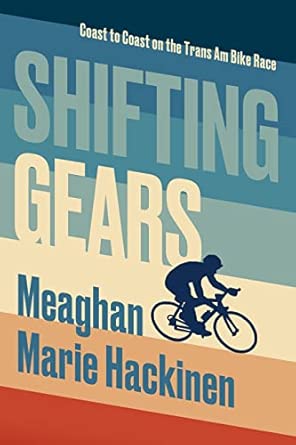
  • Shifting Gears

    Shifting Gears

    “Back on the road, I felt rejuvenated. Still slugging through the same dull trees and baking under the sun, but the dip in the river signalled a turning point—an opportunity to hit the reset button and get my vitals back and check. I considered the extremes: the road’s monotony in contrast to the silliness of our afternoon dip; summer snow on McKenzie pass compared to the blistering heat I’d encountered on the eastern side of the Cascade Range. This race, I was learning, would be a lesson in shifting gears. Not entirely different from how my confidence yo-yoed in those pre-race training months in Saskatoon.” ~ Shifting Gears by Meaghan Marie Hackinen

    I didn’t think I’d like this book. I expected it to be yet another book about hard core endurance racing – about the physical challenge of the ride, and how many different ways you can say pedalling. 

    But I did enjoy this book. It really helps that Meaghan is a good writer. She kept me engaged, cheering her on as she cycled her way across the Northern United States. One thing that makes this book different from all the others is that it provides a female perspective. When less than 10 percent of ultra cyclists are women, we don’t get to hear their stories very often. In addition to some of her physical challenges, we hear also about her safety concerns – something you rarely read about in books written by men. 

    I definitely recommend this book. I can’t wait to read what she writes next!

    Support the podcast by purchasing Shifting Gears using one of the affiliate links below.

  • South Away

    South Away

    “The road immediately grows darker under the mountain’s shadow. Evergreens shade the highway; what little light we receive comes through the narrow sliver of leaden sky overhead…while the highway shoulder is thinner than a slice of toast. Alisha and I switch on our bike lights, but compared to car headlights our beams appear pitiful. As inconsequential as fireflies darting around porch lights.” (Hackinen, 2019, 75) 

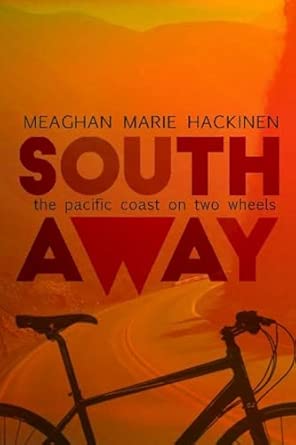
    South Away: The Pacific Coast on Two Wheels is the story of Meaghan Hackinen and her sister as they go on a low-budget bicycle adventure. Neither has any experience with bicycle touring, nor familiarity with basic bicycle maintenance—not even knowing how to change a tire. The book tells of Hackinen’s journey beginning in Terrace, British Columbia, riding until she is joined by her sister in Shawnigan Lake and continuing along the west coast through the United States and Baja-California.

    Originally from Surrey BC, Hackinen spent her post-undergrad summer putting her archeology degree to work at a museum in Northern BC, the starting point for the memoir.  

    Hackinen writes with flare that allows you to visualize and feel the strains of cycle touring during unpleasant conditions, such as how “breathing life into ghost-pale fingertips to unbuckle my panniers” (30). Unlike other authors, when she writes about the physical struggles while pedalling, it isn’t as exhausting as the riding itself. 

    The narrative shares their struggles with being on a very low budget, although Hackinen admits that their budget turned out to be lower than she had planned for. This affects the way they travel, choosing to mostly wild camp—common among low-budget cycle touring, wild camping refers to finding free places to hide away your tent at night, leaving no trace—or occasionally finding willing hosts through a website called Couchsurfing. They also purchase inexpensive groceries and avoid eating out. 

    Overall, the book provides an entertaining view of cycle touring that allows an armchair traveller to get a sense of what the trip was like. You feel the sense of accomplishment when Hackinen and her sister arrive at the end of their adventure. 

    Support the podcast by purchasing the book using one of the affiliate links below.

  • Louisburg or Bust

    Louisburg or Bust

    by RC Shaw


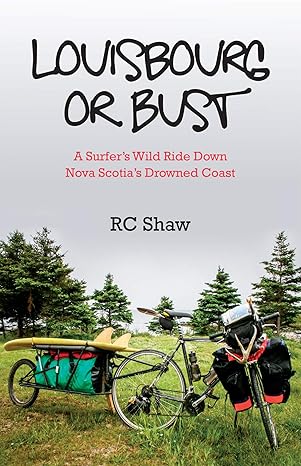
    An entertaining read that had me not wanting to put the book down. I love Shaw’s quirky way of writing about his adventures. This book is part bike packing trip, part surfing adventure, part playful literature lesson, and all craziness. Think Bill Bryson with a Nova Scotia twist. In Louisburg or Bust you get to experience the rugged beauty and charm of the Eastern Shore of Nova Scotia as local Nova Scotian. 

    Support the podcast by purchasing the book using one of the affiliate links below.
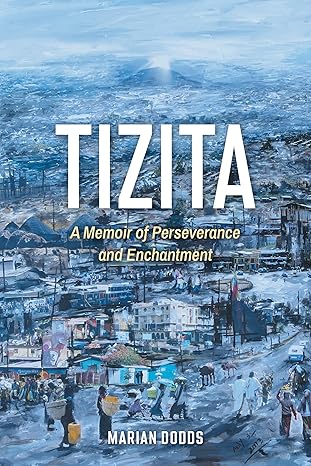
  • Tizita: A Memoir of Perseverance and Enchantment

    Tizita: A Memoir of Perseverance and Enchantment

    by Marian Dodds

    Marian is an excellent writer who takes readers along with her as she volunteers working with Ethiopia’s Ministry of Education. Unlike many books about African adventures that focus on safaris and tourism, this books explores what is like to live alongside and work with the locals. Marian writes with honesty sharing not only the joys but also the challenges of working in a foreign country. 

    The title, Tizita, is an Amharic word that translates roughly to nostalgia or longing for the past. It is also the name of a traditional Ethiopian musical style that evokes deep emotion—memories, yearning, and melancholy. It’s a perfect metaphor for Marian’s journey, capturing the essence of her reflections and the emotional depth of her story.

    It is a great read. I recommend it. 

    Support the podcast by purchasing the book using one of the affiliate links below.
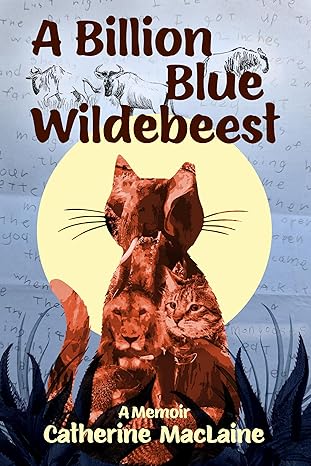
  • A Billion Blue Wildebeest

    A Billion Blue Wildebeest

    by Catherine MacLaine

    The story follows two timelines – one of her childhood growing up as an Expat in Tanzania and one as the adoptive parent of a neurologically divergent African cat.

    Catherine is a great writer, who had me wondering what next with her new charge, while also kept me curious about life as a Canadian child growing up in Africa. Her stories make you feel like you are right there with her. I can imagine myself beside her sneaking eggs from the pantry to be entertained by the mongoose, and shaking with fear at a lion’s charge.

    I’m not a cat lover, but I really enjoyed reading this book.

    Support the podcast by purchasing the book using one of the affiliate links below.
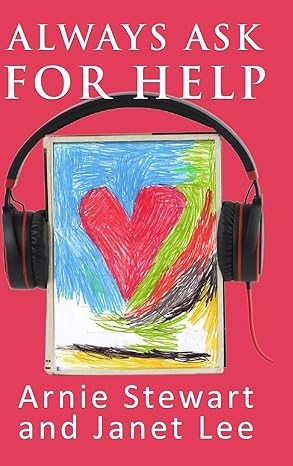
  • Always Ask For Help

    Always Ask For Help

    By Arnie Stewart and Janet Lee

    Always Ask for Help is the true story of Arnie Stewart, told with Janet Lee. What sets it apart is that Arnie speaks in his own words—unpolished, colloquial, and honest. The book keeps his voice intact, so it feels like a conversation.

    Arnie began adulthood unable to read or write. As someone who relies on literacy every day, I hadn’t fully grasped how text saturates life until I read this book. Grocery lists, forms, job applications, street signs—what I consider simple becomes obstacles. Arnie’s workarounds reveal a sharp, adaptive mind, challenging the link people make between literacy and intelligence.

    Janet Lee’s role adds warmth and purpose. We see how they met and how their friendship became advocacy—visiting schools and urging students to do the bravest simple thing: ask for help. The “Arnie card” keeps that message clear and memorable.

    This is a feel-good story, but not because it avoids hardship. It’s uplifting because it treats vulnerability as a source of strength and community as a source of change. The heart of the book is simple: none of us gets through life alone, and asking for help is not failure—it’s a skill. Arnie’s journey shows what becomes possible when shame loosens its grip and support steps in.

    Support the podcast by purchasing the book using one of the affiliate links below.